
Fusedash vs iGPT
Side-by-side comparison to help you choose the right AI tool.

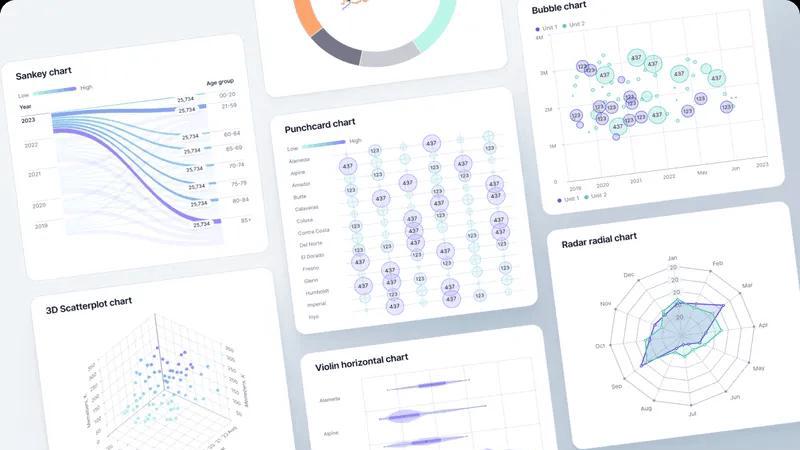
Fusedash transforms raw data into interactive dashboards and charts, empowering teams to act on insights instantly.
Last updated: March 4, 2026

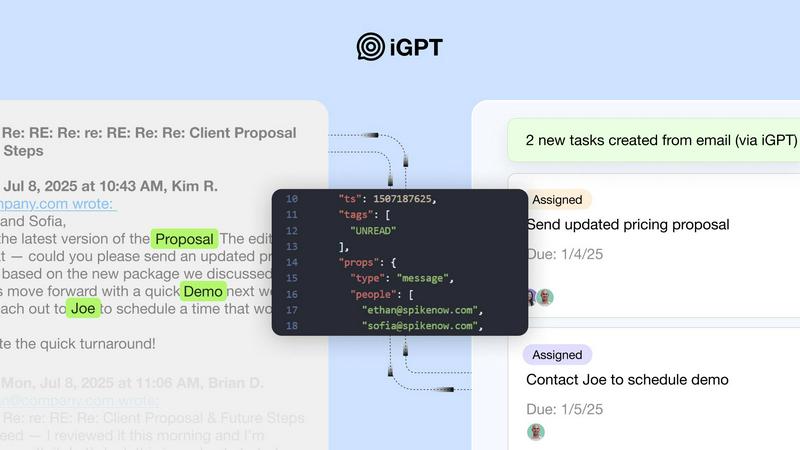
iGPT transforms messy email data into instant, secure, context-aware answers for enterprise agents and workflows.
Last updated: March 1, 2026
Visual Comparison
Fusedash
iGPT
Feature Comparison
Fusedash
Flexible Views
Fusedash offers the ability to create tailored dashboards, charts, maps, and report-style views from the same dataset, catering to the unique needs of various teams. This flexibility minimizes back-and-forth communication, ensuring that stakeholders receive precisely the information they need without extra hassle. Users can customize layouts, filters, and time ranges, allowing for a streamlined data presentation across the organization.
AI Chart Generator
With Fusedash's AI Chart Generator, users can produce clear and informative visuals from their data in mere minutes. This feature enables quick selections of chart types, application of comparisons, and refinement of labels, ensuring that each chart effectively tells its story. Users have the option to integrate these charts into dashboards or utilize them as standalone visuals for specific reporting needs.
Dashboard Software
Fusedash centralizes dashboards and reporting into one cohesive workspace, making it easier for teams to monitor KPIs while providing essential context. By combining performance metrics with narrative storytelling, users can clearly communicate what has changed, why it matters, and what actions should follow. This integration helps to maintain alignment across teams and reduces discrepancies in reporting versions.
AI Chat
The Smart Chat feature of Fusedash revolutionizes data exploration by allowing users to ask questions in plain language. This functionality not only helps users navigate their data more efficiently but also provides suggestions for optimal metrics, charts, and breakdowns. The insights gained can be effortlessly transformed into shareable views within dashboards, thereby enhancing collaboration and understanding among team members.
iGPT
Immediate Integration
iGPT features a live playground and SDK for developers to quickly test requests and responses. This immediate integration capability ensures that enterprises can start leveraging the power of email intelligence without extensive setup or delay, enhancing productivity right from the start.
Contextual Responses
When users send a request, iGPT provides responses that are ready for reasoning and automation. Each answer is not only relevant but also includes citations to the source, allowing users to trace back to the original email threads and attachments for verification and deeper understanding.
Hybrid Retrieval
iGPT combines semantic and keyword-based retrieval within a single call, employing advanced filtering and scoring techniques. This hybrid approach allows it to adapt to varying queries and extract the most pertinent information from extensive and complex email data, significantly improving response relevance and accuracy.
Continuous Data Indexing
With real-time ingestion, iGPT continuously indexes new messages and attachments as they arrive. This feature ensures that the responses generated are always based on the most current data, maintaining an up-to-date repository of insights that users can rely on for timely decision-making.
Use Cases
Fusedash
Marketing Analysis
Marketing teams can leverage Fusedash to create dynamic dashboards that track campaign performance, customer engagement, and ROI. By visualizing data in real-time, marketers can make informed decisions and adjust strategies promptly, ensuring that resources are allocated effectively.
Financial Reporting
Finance departments can utilize Fusedash to generate detailed financial reports that combine historical data with real-time insights. By standardizing KPIs and metrics, finance teams can ensure consistent reporting across departments, leading to more accurate forecasting and budgeting.
Sales Performance Monitoring
Sales teams can benefit from Fusedash's interactive dashboards to monitor sales performance and pipeline metrics. By visualizing data by region, product, or sales rep, teams can quickly identify trends and areas for improvement, facilitating timely interventions.
Operations Management
Operations teams can use Fusedash to track key operational metrics, such as supply chain efficiency and production timelines. By integrating various data sources into a single view, teams can optimize processes and respond quickly to any operational challenges.
iGPT
Email Assistants
iGPT empowers organizations to build intelligent email agents that can draft, prioritize, and take action on emails. By leveraging the full context of past communications, these agents enhance productivity and ensure that no critical tasks fall through the cracks.
Workflow Automation
Transforming email threads into actionable tasks, deadlines, and approvals is seamlessly achievable with iGPT. By flagging items that are stuck in the workflow, teams can proactively address bottlenecks and streamline their operations.
Support Copilots
Customer support teams can utilize iGPT to reconstruct the full customer story across long email chains, including attachments and shifts in tone. This contextual awareness enables representatives to provide more effective and personalized support to clients.
Compliance and Audit Trail
With iGPT, organizations can trace feedback, approvals, and rationale directly back to the original conversations. This comprehensive audit trail not only enhances compliance but also fosters accountability and transparency within teams.
Overview
About Fusedash
Fusedash is an innovative AI-powered data visualization platform that empowers teams to transform their connected data into insightful and actionable visuals. Designed for organizations tired of juggling multiple, disconnected tools, Fusedash serves as a unified workspace where users can create decision-ready dashboards, interactive charts, detailed maps, and narrative reports—all without the hassle of rebuilding logic across various platforms. Its main value proposition lies in delivering consistency and efficiency; users define key metrics and KPIs once, ensuring that everyone from leadership to marketing to operations references the same reliable numbers. With features that facilitate real-time monitoring and deep data exploration, Fusedash not only helps teams stay aligned but also fosters a deeper understanding of data trends and narratives. Integrated AI functionalities, including natural language data chat and smart visualization assistance, further streamline the data reporting process, making it faster and more accessible. Fusedash is not just about monitoring; it is about understanding the "why" behind the data, enabling organizations to take informed actions based on a shared source of truth.
About iGPT
Imagine a world where the rich, contextual intelligence embedded within your organization's emails and communications is not only accessible but also actionable. iGPT is an enterprise-grade API that serves as a secure and intelligent gateway for AI agents and workflows, designed specifically for developers and enterprises. It transforms the chaotic landscape of email threads, attachments, and conversations into trusted, context-aware answers that drive meaningful action. By eliminating the traditional bottlenecks of AI integration—such as complex parsing and maintaining fragile prompt chains—iGPT offers a unified endpoint. This single natural language query can trigger a sophisticated pipeline that manages real-time retrieval, context shaping, and reasoning. With iGPT, teams can confidently deploy systems for sales, customer success, compliance, and beyond, ensuring that every response is grounded in source data while maintaining enterprise-grade security and full auditability. iGPT not only reads emails; it comprehensively understands the narratives within, turning communication data into a strategic asset that propels organizations forward.
Frequently Asked Questions
Fusedash FAQ
What types of data can I connect to Fusedash?
Fusedash allows users to connect a variety of data sources, including CSV files, APIs, and public datasets. This flexibility enables teams to consolidate their data into a single platform for comprehensive analysis and reporting.
How does Fusedash ensure data consistency across reports?
Fusedash enables users to define key metrics and KPIs once, ensuring that these definitions are reused across all dashboards and reports. This consistency fosters trust in the data and reduces discrepancies in reporting.
Can I customize the visualizations in Fusedash?
Absolutely! Fusedash provides users with extensive customization options for dashboards, charts, and maps. Users can modify layouts, apply filters, and define time ranges to tailor their visualizations according to specific audience needs.
Is there a way to automate reporting in Fusedash?
Yes, Fusedash supports automated reporting through its integrated features, allowing users to set refresh schedules for their datasets. This ensures that reports reflect the most current data without manual intervention, saving time and reducing errors.
iGPT FAQ
How does iGPT ensure data security?
iGPT employs enterprise-grade protection at every layer, including zero data retention and role-based access control. Inputs, prompts, and outputs are processed in memory and are never stored, ensuring your data remains secure.
Can iGPT integrate with existing email systems?
Yes, iGPT is designed for easy integration with existing email systems. It automatically indexes emails and attachments, allowing organizations to leverage its capabilities without overhauling their current infrastructure.
What types of data can iGPT analyze?
iGPT can analyze a variety of data types found in emails, including text, attachments, and structured documents such as PDFs and spreadsheets. This broad capability enables comprehensive insights from diverse sources.
Is training on my data required for iGPT to function?
No, iGPT does not require training on your data to function effectively. Your data remains private and is not used for model training, ensuring that sensitive information is protected while still delivering valuable insights.
Alternatives
Fusedash Alternatives
Fusedash is an innovative AI-powered data visualization platform that helps teams convert their raw data into clear dashboards and charts, streamlining the decision-making process. As part of the Analytics & Data and Business Intelligence categories, Fusedash provides a unified workspace for users to create interactive visualizations without the hassle of navigating through multiple disconnected tools. Users often seek alternatives to Fusedash for various reasons, such as pricing constraints, specific feature requirements, or the need for compatibility with existing platforms. When exploring alternatives, it's essential to consider factors like ease of use, the ability to customize metrics and KPIs, integration capabilities with other tools, and the overall cost-effectiveness of the solution. Choosing the right platform can significantly enhance data-driven decision-making and foster organizational alignment.
iGPT Alternatives
iGPT is an enterprise-grade API designed to provide secure and instant answers from the often chaotic world of email data and attachments. It fits within the realm of business intelligence, acting as a sophisticated gateway for AI agents to extract meaningful insights from unstructured communication. Users typically seek alternatives to iGPT for various reasons, including pricing concerns, specific feature sets, or compatibility with existing platforms. When evaluating alternatives, it's essential to consider factors such as ease of integration, the comprehensiveness of data processing, and the level of security provided to ensure that your organization's sensitive information remains protected. As organizations increasingly rely on advanced AI solutions, finding the right tool that meets unique operational needs becomes paramount. A suitable alternative should offer a seamless user experience, robust data handling capabilities, and a clear understanding of context to maximize the value extracted from communication data. Additionally, evaluating the scalability and support options can help ensure the chosen solution aligns with long-term business objectives.