
Crawlkit vs Oneprofile
Side-by-side comparison to help you choose the right AI tool.

Crawlkit
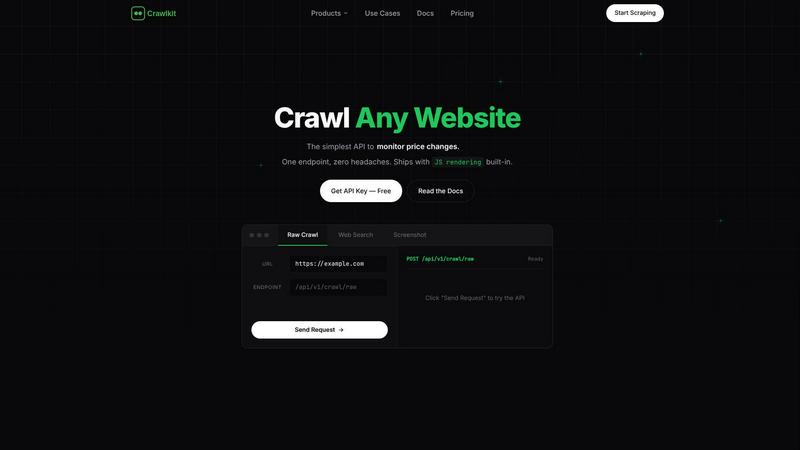
Crawlkit turns any website into structured data with a single, simple API call.
Last updated: February 28, 2026

Oneprofile
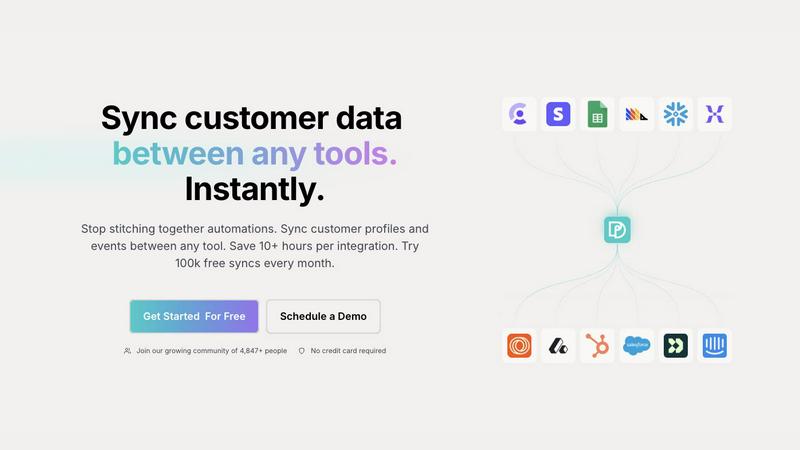
Seamlessly sync and unify customer profiles across tools to ensure consistent data and save hours on integrations.
Last updated: February 28, 2026
Visual Comparison
Crawlkit
Oneprofile
Feature Comparison
Crawlkit
Unified API for Diverse Sources
Crawlkit consolidates access to a wide array of data sources under one cohesive API. Whether you're curious about a company's details on LinkedIn, an influencer's metrics on Instagram, app reviews on the Play Store, or real-time web search results, you use the same simple interface. This eliminates the need to learn and maintain multiple scraping tools or adapt to different website structures, allowing you to satisfy your data curiosity across the entire digital landscape with consistent, predictable calls.
Infrastructure Abstraction
The platform expertly handles the most challenging aspects of modern web scraping behind the scenes. This includes managing rotating proxy pools to avoid IP blocks, executing JavaScript in headless browsers to render dynamic content, respecting rate limits, and parsing platform-specific HTML into clean JSON. This feature satisfies a deep curiosity: what if you could access the data without ever worrying about how it's fetched? Crawlkit makes this a reality, letting you explore data collection at scale without operational overhead.
Reliable & Complete Data Delivery
Crawlkit is engineered for reliability, ensuring you receive complete, usable data every time. It patiently waits for full page loads on complex single-page applications (SPAs) and validates all responses before delivery. This means you never have to wonder if a missing data field is due to a parsing error or a failed load. The guarantee of structured, complete outputs allows you to build robust systems and analyses with confidence, turning sporadic data glimpses into a steady stream of insight.
Transparent, Flexible Pricing
Curious about costs? Crawlkit employs a straightforward credit-based system where each API endpoint has a fixed cost, and you only pay for successful requests (with refunds on failures). There are no monthly commitments, no rate limits, and purchased credits never expire. This model encourages experimentation and scales with you, offering volume discounts for larger needs. It answers the fundamental question of value, providing clear, predictable pricing without hidden fees or punitive scaling.
Oneprofile
Unified Customer Profiles
Oneprofile excels at unifying customer profiles across different tools. This feature ensures that every system within a business refers to the same customer identity, eliminating variations and discrepancies that can arise from using multiple platforms. By providing a single, consistent view of each customer, businesses can make informed decisions and enhance their customer engagement strategies.
Real-Time Data Synchronization
With Oneprofile, customer data is synchronized in real-time, meaning any changes made in one system are instantly reflected across all connected platforms. This capability significantly reduces the risk of outdated information and ensures that teams are always working with the most current data available, fostering better collaboration and more effective communication.
Customizable Data Flow Control
Oneprofile offers businesses the ability to define how customer data flows between systems. Users can map fields automatically or manually, control the direction of data synchronization, and determine how updates are propagated. This level of customization allows companies to tailor the integration to their specific operational needs, making data management flexible and adaptable.
Smart Field Mapping
The smart field mapping feature enables users to easily align data fields between different tools. Oneprofile intelligently matches identities and fields, ensuring that the right data is sent to the right place without manual intervention. This automation reduces the time and effort required to maintain accurate data synchronization, allowing teams to focus on their core tasks.
Use Cases
Crawlkit
Competitive Intelligence and Market Research
Imagine automatically tracking your competitors' digital footprints. With Crawlkit, you can systematically monitor their LinkedIn company pages for employee growth and job postings, scrape their app store listings for feature updates and user sentiment, or analyze their public Instagram engagement. This continuous stream of structured data fuels dynamic dashboards and reports, satisfying a deep curiosity about market position and revealing strategic opportunities without manual, repetitive research.
Lead Generation and CRM Enrichment
Sales and marketing teams can transform raw lead lists into rich profiles. By feeding website URLs or company names into Crawlkit's LinkedIn API, you can automatically pull job titles, company information, professional summaries, and other key details to enrich contact records in your CRM. This process turns a simple list of names into a deep, actionable understanding of your potential customers, enabling highly personalized outreach and improving sales conversion rates.
Social Media Monitoring and Growth Tracking
For brands, agencies, or influencers, understanding social performance is key. Crawlkit allows you to programmatically track key Instagram metrics—like follower counts, post engagement rates, and content themes—for your own account or competitors'. Schedule weekly scripts to pull this data and visualize growth trends over time. This use case satisfies the curiosity of what content resonates most and provides data-driven insights to inform your social media strategy.
Product Development and Review Analysis
App developers and product managers can harness direct user feedback at scale. Use Crawlkit to pull all reviews from the Google Play Store or Apple App Store for your app or competing products. Analyze this structured data to uncover common pain points, feature requests, and sentiment trends. This turns the chaotic noise of user reviews into a clear signal, guiding your product roadmap and helping you understand exactly what users love or wish was different.
Oneprofile
Marketing Automation
Oneprofile can revolutionize marketing automation efforts by ensuring that customer profiles are consistently updated across all marketing tools. This means that marketing campaigns can be more accurately targeted, leading to higher engagement rates and improved conversion metrics.
Customer Support Enhancement
Customer support teams benefit greatly from Oneprofile’s ability to maintain synchronized customer information. When a support agent accesses a customer's profile, they have the latest data at their fingertips, allowing for more informed and efficient service interactions that boost customer satisfaction.
Sales Team Efficiency
Sales teams can leverage Oneprofile to ensure they are working with up-to-date customer data across their CRM and other sales tools. This real-time access allows for better prospecting and follow-ups, ultimately leading to increased sales and improved client relationships.
Product Development Insights
Product teams can utilize Oneprofile to gather consistent feedback and data from various sources, ensuring that customer insights are accurately reflected in their development processes. This leads to a product that better meets customer needs and drives higher user satisfaction.
Overview
About Crawlkit
Ever wondered how to turn the vast, unstructured data of the web into a clean, reliable stream of information for your projects? Crawlkit is the answer. It's a developer-first web data extraction platform that transforms the complex, often frustrating task of web scraping into a simple API call. Imagine needing data from LinkedIn for sales intelligence, Instagram for social listening, or app stores for market analysis. Instead of wrestling with headless browsers, proxy rotations, and anti-bot countermeasures, Crawlkit abstracts all that infrastructure away. It provides a single, powerful interface to extract structured data from virtually any website or platform, including search engines, social media, and app stores. Built for developers and data teams, its core value proposition is profound simplicity and reliability. You focus entirely on leveraging the data—building applications, enriching CRMs, or training models—while Crawlkit handles the intricate mechanics of collection, parsing, and delivery. With transparent, pay-as-you-go pricing and credits that never expire, it invites you to start small, experiment freely, and scale your data pipelines without lock-in or surprise commitments.
About Oneprofile
Oneprofile is a groundbreaking solution designed to streamline the way businesses manage their customer data across multiple tools and platforms. In today’s fast-paced digital landscape, organizations often struggle with fragmented customer information scattered across various systems, leading to inefficiencies and confusion. Oneprofile solves this problem by synchronizing customer profiles and events in real-time across all the tools a company utilizes, including CRMs, analytics, marketing, and support platforms. This means that when customer data changes in one location, it is instantly reflected everywhere else, ensuring everyone within the organization is on the same page. By eliminating the need for manual processes and preventing integration failures, Oneprofile offers a seamless data management experience that saves time and enhances productivity. Designed for businesses of all sizes, it allows teams to focus on what truly matters—delivering exceptional customer experiences without the hassle of data discrepancies.
Frequently Asked Questions
Crawlkit FAQ
What happens if a request fails?
Crawlkit operates on a "succeed or refund" principle. If an API request fails to return the complete, structured data as promised—due to a site being down, a block, or any other issue—the credits used for that request are automatically refunded to your account. This ensures you only pay for successful data delivery, making it risk-free to integrate into automated pipelines.
Do I need to manage proxies or browsers?
No, and that's one of the core benefits. Crawlkit completely abstracts away the infrastructure. The service manages large pools of rotating residential and data center proxies, headless browser instances, and all necessary configurations to navigate anti-bot measures. You simply make an API request and receive clean data, without any operational burden.
How is the data returned?
Data is returned as structured JSON via the API. The structure is clean, consistent, and well-documented for each endpoint (like /linkedin/company or /instagram/profile). For example, a LinkedIn company request might return fields like name, followers, employees, and description, ready to be inserted directly into your database or application logic.
Can I request a new data source or API endpoint?
Absolutely. Crawlkit encourages users to reach out with requests for new platforms or specific data points. Their philosophy, "Need an API we don't have yet? Talk to us, we'll build it," highlights a commitment to expanding their coverage based on user needs. This makes it a collaborative platform that grows with the curiosities and requirements of its developer community.
Oneprofile FAQ
How does Oneprofile ensure data consistency across different tools?
Oneprofile uses real-time synchronization to ensure that any changes made to customer data in one system are automatically updated across all connected tools, maintaining data consistency and accuracy.
Can I customize how data flows between my systems with Oneprofile?
Yes, Oneprofile allows users to define how customer data moves between systems. You can map fields, control the sync direction, and set specific triggers for updates based on your business processes.
Is there a limit to the number of syncs I can perform each month?
Oneprofile offers a generous plan that includes 100,000 free syncs every month, allowing businesses to efficiently manage their data without incurring additional costs.
What types of tools can Oneprofile connect with?
Oneprofile is designed to integrate with a wide variety of tools, including CRMs, analytics platforms, marketing automation software, and support systems, making it a versatile solution for any business stack.
Alternatives
Crawlkit Alternatives
Crawlkit is a modern web data extraction platform, squarely in the analytics and data category. It's designed for developers and data teams who need to bypass the complexities of proxies, browsers, and anti-bot systems to reliably gather web data through a simple API. Users often explore alternatives for a variety of reasons. This curiosity might be driven by specific budget constraints, a need for different feature sets like specialized data sources or integration capabilities, or simply a desire to evaluate the entire landscape before committing to a tool that will power critical data pipelines. When evaluating other options, it's wise to consider several key factors. Look for robust JavaScript rendering for modern websites, high success rates against anti-bot measures, and the scalability to handle your project's volume. The ideal platform should, like Crawlkit, let you focus on using data rather than wrestling with the mechanics of collecting it.
Oneprofile Alternatives
Oneprofile is a powerful tool designed to sync customer profiles and events across various platforms, ensuring that businesses maintain a unified view of their customers. By eliminating the need for each system to manage its own version of customer data, Oneprofile automates the synchronization process, allowing for seamless integration between CRMs, analytics, support, and marketing tools. This capability is essential in today’s data-driven landscape, where accuracy and immediacy are paramount. Users often seek alternatives to Oneprofile for a myriad of reasons, including pricing considerations, specific feature requirements, or differing platform needs. The search for a suitable alternative can also stem from the desire for more flexibility, user-friendliness, or integration options. When exploring alternatives, it’s vital to consider factors such as ease of use, the extent of integration with existing tools, pricing models, and the level of customer support provided. A thorough evaluation of these elements can lead to a better fit for your unique business requirements.