
Lovalingo vs qtrl.ai
Side-by-side comparison to help you choose the right AI tool.

Lovalingo
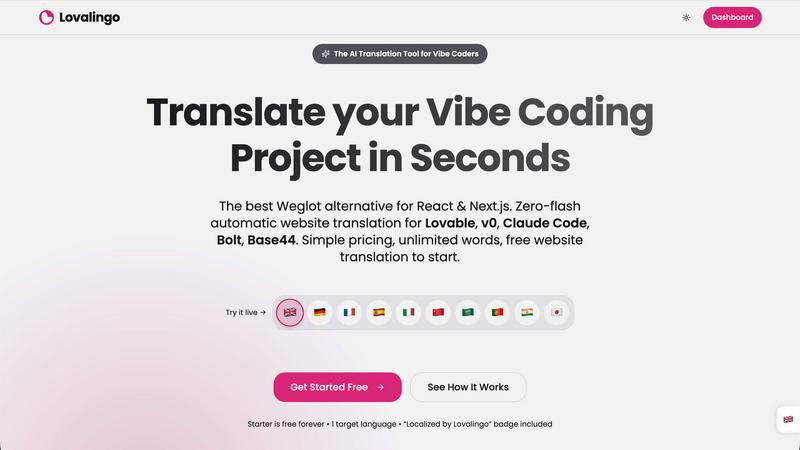
Discover how Lovalingo instantly translates and indexes your React apps with zero flash.
Last updated: February 28, 2026

qtrl.ai
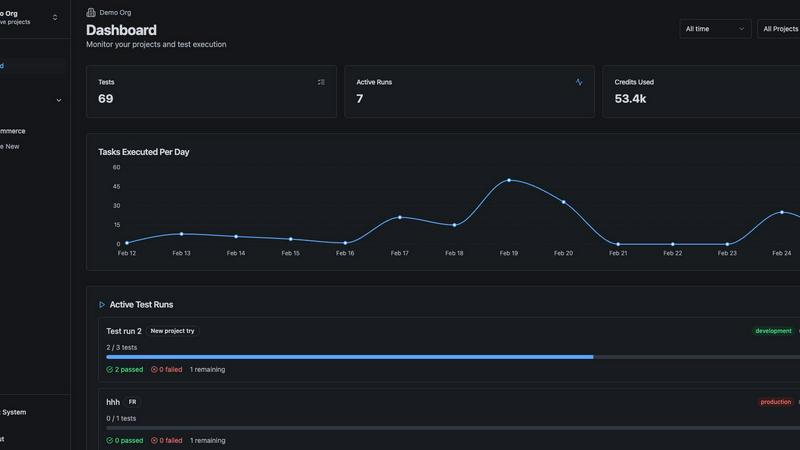
qtrl.ai empowers QA teams to scale testing with AI while ensuring control, governance, and seamless integration.
Last updated: March 4, 2026
Visual Comparison
Lovalingo
qtrl.ai
Feature Comparison
Lovalingo
Zero-Flash, Render-Native Translation
Unlike traditional script-based tools that manipulate the DOM after the page loads, causing flickering and layout shifts, Lovalingo operates within your React render flow. It serves the correct translated content during the initial render, ensuring a perfectly stable layout from the first paint. This native integration guarantees a smooth, professional user experience with no visual glitches, which is crucial for maintaining trust and engagement with a global audience.
One-Prompt Installation & Vibe-Coding Ready
Designed from the ground up for AI-assisted development, Lovalingo can be integrated in about 60 seconds. You simply copy a comprehensive prompt into your AI coding tool (like Lovable or Claude Code), and it handles the entire setup—installing the NPM package, wrapping your app in the provider, and configuring the initial locales. This seamless compatibility means your development velocity remains unhindered, allowing you to maintain a rapid "vibe coding" workflow while adding powerful multilingual capabilities.
Automatic Translation & Zero Maintenance
Lovalingo completely removes the need for manual translation files. It automatically detects text content within your application and translates it on the fly. As you build and add new features, the system recognizes and translates new strings in real-time. This eradicates the tedious maintenance cycle of updating JSON files for every language whenever you change a button label or paragraph, freeing you from a significant operational burden.
Built-in Multilingual SEO Tools
Going global isn't just about UI text; it's about being found. Lovalingo automatically handles critical SEO mechanics for you. It generates multilingual sitemaps and inserts the correct hreflang tags into your page headers, telling search engines like Google which language version of a page to serve to users in different regions. This automation ensures your site is primed for global indexing from the moment you launch, helping you capture organic traffic in new markets from day one.
qtrl.ai
Autonomous QA Agents
qtrl.ai's Autonomous QA Agents execute instructions on demand or continuously, allowing teams to run tests across multiple environments at scale. These agents operate within user-defined rules and ensure real browser execution rather than simulations, enabling reliable testing outcomes.
Enterprise-Grade Test Management
The platform offers a centralized repository for managing test cases, plans, and runs, providing full traceability and audit trails. With manual and automated workflows integrated, qtrl.ai is built to meet compliance standards and facilitate robust governance.
Progressive Automation
Teams can start with human-written instructions and progressively move to AI-generated tests when they feel ready. qtrl.ai suggests new tests based on coverage gaps, allowing teams to review, approve, and refine tests at every step of the automation journey.
Adaptive Memory
qtrl.ai features Adaptive Memory, which builds a living knowledge base of the application. It learns from exploration, test execution, and issues, powering smarter and context-aware test generation that improves with every interaction, ensuring continuous enhancement of the testing process.
Use Cases
Lovalingo
SaaS Founders Scaling Internationally
For startup founders and product teams, speed to market is everything. Lovalingo allows you to validate and launch your SaaS product in multiple regions simultaneously without slowing down development. You can quickly test market fit in Germany, France, or Japan with a professionally localized product, all while continuously iterating on your core features without a separate i18n process creating bottlenecks.
Agencies Building Client Projects on AI Platforms
Development agencies using Lovable or similar platforms to deliver websites and web apps for clients can dramatically expand their service offering. With Lovalingo, they can promise and deliver multilingual sites without exponentially increasing the project's complexity, timeline, or cost. This becomes a powerful competitive advantage, allowing them to win more clients who need to reach diverse audiences.
Developers Prototyping and Building MVPs
When building a minimum viable product or a prototype, every minute counts. Developers leveraging AI coding tools need to focus on core functionality. Lovalingo removes the entire i18n consideration from the early build phase, allowing developers to craft their MVP in a single language while being confident that adding languages later will be an automatic, trivial step rather than a major refactor.
Product Teams Managing Continuous Deployment
For teams that ship updates frequently, maintaining translation files across multiple branches and features is a nightmare. Lovalingo's automatic detection and translation mean that new content pushed in a deployment is immediately ready for translation. This keeps all language versions of the app in sync automatically, ensuring a consistent global user experience without manual intervention from the development or content teams.
qtrl.ai
Product-Led Engineering Teams
Product-led engineering teams can leverage qtrl.ai to scale their quality assurance efforts without losing control. The platform enables them to manage tests efficiently while gradually adopting automation, ensuring that product quality remains a top priority.
QA Teams Transitioning from Manual Testing
For QA teams moving beyond manual testing, qtrl.ai provides a structured approach to integrate automation seamlessly. Teams can start with simple test management and evolve to utilize AI-driven agents, making the transition smoother and more efficient.
Companies Modernizing Legacy Workflows
Organizations looking to modernize their legacy QA workflows can benefit from qtrl.ai's comprehensive features. The platform supports existing tools, allowing teams to integrate modern testing practices without disrupting established processes.
Enterprises Requiring Governance and Traceability
Enterprises that demand strict compliance and audit trails will find qtrl.ai perfectly suited to their needs. With full traceability and robust governance features, teams can ensure that their quality assurance processes meet regulatory requirements while maintaining high standards.
Overview
About Lovalingo
What if you could build for a global audience from day one, without ever touching a translation file? Lovalingo is an AI-powered translation engine designed specifically for the modern, fast-paced world of vibe coding. It completely reimagines internationalization (i18n) for developers using AI tools like Lovable, v0, Claude Code, Bolt, and Base44. Instead of the traditional, cumbersome process of managing JSON strings and manual entries, Lovalingo automates everything. It integrates natively into your React or Next.js application's render cycle, detecting and translating content in real-time. This means you can ship features at the speed of AI, and your app automatically scales to support over 20 languages instantly. It's built for SaaS founders eyeing international markets, agencies delivering client projects rapidly, and any developer who believes their time is better spent building features than managing translation spreadsheets. The core promise is simple: eliminate the maintenance headache of i18n and unlock seamless global growth.
About qtrl.ai
qtrl.ai is a cutting-edge quality assurance platform designed to empower software teams to enhance their QA processes without compromising control or governance. By combining enterprise-grade test management with intelligent AI automation, qtrl.ai offers a holistic solution for managing software quality. It serves as a centralized hub where teams can efficiently organize test cases, plan test runs, and trace requirements to ensure comprehensive coverage. With real-time dashboards, qtrl.ai provides visibility into testing outcomes, helping engineering leads and QA managers identify potential risks swiftly. What sets qtrl.ai apart is its progressive AI layer, which allows teams to gradually adopt automation. Starting from manual test management, teams can evolve to leverage autonomous agents that generate, maintain, and execute UI tests seamlessly across various environments. This adaptability makes qtrl.ai ideal for product-led engineering teams, QA groups transitioning from manual testing, organizations modernizing legacy workflows, and enterprises that require stringent compliance and audit trails. Ultimately, qtrl.ai aims to bridge the gap between the slow pace of manual testing and the complexities of traditional automation, facilitating a trusted path to faster, more intelligent quality assurance.
Frequently Asked Questions
Lovalingo FAQ
How does Lovalingo compare to manual i18n libraries like react-i18next?
While traditional libraries give you fine-grained control, they require you to manually wrap every string, manage massive JSON files for each language, and constantly update them. Lovalingo automates this entire process. Imagine managing 700 words across 5 languages—that's 3,500 manual entries with i18n. Lovalingo handles it all automatically, in real-time, as you build, making it ideal for rapid development cycles.
Is there really no flickering or layout shift with Lovalingo?
Correct. This is a key differentiator from script-based services like Weglot. Those tools load your page in the default language first, then run a script to find and replace text, which often causes a visible "flash." Lovalingo is a React library that integrates at the component level, determining and rendering the correct language during the initial React render cycle, so the page paints correctly the first time, with no post-load DOM manipulation.
What happens to my existing English (or default language) content?
Your original source content remains completely intact and untouched. Lovalingo works by detecting text nodes in your React components and serving the appropriate translation from its cloud-based engine at render time. You continue to write and build your app in your preferred language, and Lovalingo handles the multi-language presentation layer seamlessly.
Can I edit the automatic translations if they aren't quite right?
Yes. While the automatic AI translations are high-quality and context-aware, the platform provides controls for professional linguists or your team to review and fine-tune translations. This ensures brand voice, technical terminology, and cultural nuances are perfectly captured, giving you the best of both worlds: full automation with the option for human-in-the-loop refinement.
qtrl.ai FAQ
What makes qtrl.ai different from traditional QA tools?
qtrl.ai uniquely combines enterprise-grade test management with a progressive AI layer, allowing teams to gradually adopt automation while maintaining control. This approach mitigates the risks associated with traditional "black-box" AI systems.
Can qtrl.ai integrate with existing tools?
Yes, qtrl.ai is designed to work seamlessly with existing tools and workflows. This adaptability facilitates the modernization of QA practices without disrupting current processes, ensuring a smooth transition for teams.
How does qtrl.ai ensure test execution across different environments?
qtrl.ai allows teams to run tests across various environments, including development, testing, staging, and production. It supports per-environment variables and encrypted secrets, ensuring security and consistency in test execution.
Is it easy to scale QA efforts with qtrl.ai?
Absolutely. qtrl.ai is built for scalability, enabling teams to manage test cases, automate execution, and explore autonomous QA at their own pace. This flexibility allows teams to enhance their QA processes without compromising oversight or governance.
Alternatives
Lovalingo Alternatives
Lovalingo is a modern solution for translating and indexing React applications, designed to automate the entire internationalization process. It belongs to the category of developer tools focused on i18n and SEO, aiming to eliminate the traditional headaches of manual JSON management and broken layouts. Users often explore alternatives for various reasons, such as budget constraints, specific feature requirements, or compatibility with different tech stacks beyond React-based frameworks. When searching for a different tool, it's natural to consider factors like pricing models, the depth of SEO automation, and the core translation methodology. Some solutions prioritize ease of use over developer control, while others might offer broader platform support at the cost of integration complexity. The key is to identify what matters most for your project's workflow and growth trajectory. Evaluating an alternative requires a clear understanding of your needs. Consider the importance of a zero-flash user experience, the level of automation for sitemaps and hreflang tags, and how the tool handles content updates. The goal is to find a solution that not only translates words but also seamlessly supports your app's performance and global discoverability without creating new maintenance burdens.
qtrl.ai Alternatives
qtrl.ai is a cutting-edge quality assurance platform designed to help software teams enhance their testing processes through a blend of AI-powered automation and traditional test management. This innovative tool allows QA professionals to scale their efforts while maintaining full control and governance, making it an invaluable asset for product-led engineering teams and enterprises with strict compliance needs. Users often seek alternatives to qtrl.ai for various reasons, including pricing structures, feature sets, and unique platform requirements that may not align with qtrl.ai's offerings. When exploring alternatives, it’s essential to consider aspects such as ease of integration, the scalability of automation features, the ability to maintain control over testing processes, and any specific compliance or reporting needs that your organization may have.