
GAAbstract vs Image3D AI
Side-by-side comparison to help you choose the right AI tool.

GAAbstract
Discover how AI transforms your research abstract into a stunning graphical summary in seconds.
Last updated: February 28, 2026

Image3D AI
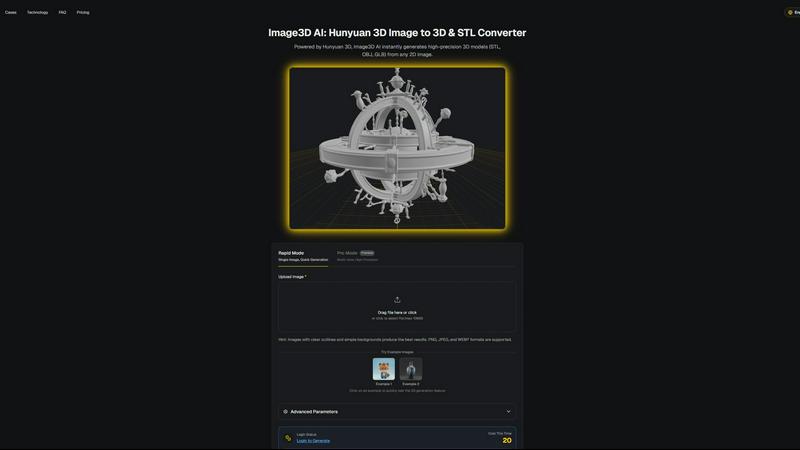
Transform any 2D image into high-precision 3D models in minutes, ideal for printing and game development.
Last updated: March 1, 2026
Visual Comparison
GAAbstract
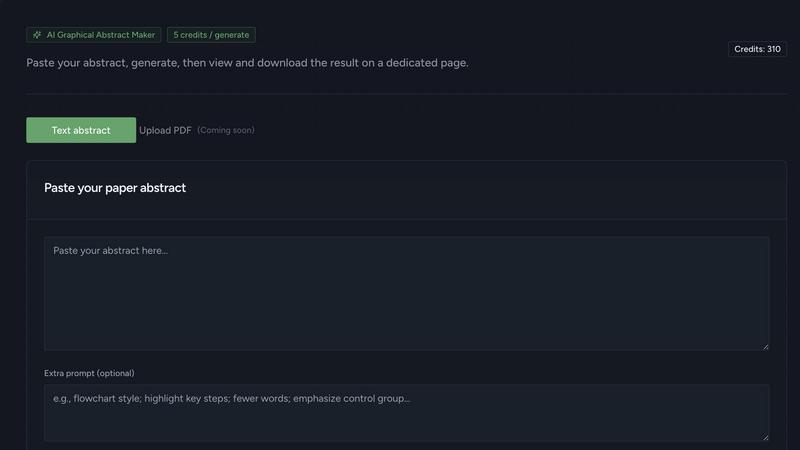
Image3D AI
Feature Comparison
GAAbstract
AI-Powered Research Comprehension
At the heart of GAAbstract is an AI engine built to understand scientific language. When you paste your abstract, it doesn't just scan for keywords; it analyzes the narrative to identify the core problem, methodology, key results, and conclusions. It maps out the relationships between different entities and processes, forming a logical structure that becomes the blueprint for your graphical abstract. This deep comprehension ensures the generated visual accurately reflects the intellectual contribution of your work.
Seconds to First Draft Generation
The tool eliminates the daunting blank canvas. Leveraging its analysis, GAAbstract generates a complete, structured draft of your graphical abstract almost instantaneously. This initial draft includes a suggested layout, relevant icons, and textual labels, providing a solid, editable foundation. This feature allows researchers to rapidly visualize their ideas and begin the iterative process of refinement immediately, turning hours of potential design work into minutes of productive review.
Fully Editable Real-Time Canvas
Every element generated by the AI is fully customizable, fostering an exploratory editing environment. You can refine text, adjust styles, swap icons, and reorganize the layout with real-time preview. This flexibility ensures that the final output aligns perfectly with your vision and any specific journal guidelines. The tool supports your creativity, allowing you to experiment with different visual narratives until you discover the most effective way to communicate your findings.
High-Resolution Multi-Format Export
Once your exploration yields the perfect graphical abstract, GAAbstract facilitates seamless sharing and submission. You can export your creation in high-resolution formats suitable for any purpose, whether it's a journal submission requiring specific dimensions (like 4x2 inches at 300 DPI), a slide for an upcoming conference talk, or a shareable image for academic social media. This removes technical export hassles and ensures your visual is always publication-ready.
Image3D AI
Rapid Mode
Rapid Mode allows users to generate 3D models from a single image quickly, making it ideal for logos, sketches, and simpler designs. This feature prioritizes speed without compromising the essential details needed for effective modeling, enabling creators to work efficiently.
Pro Mode
Pro Mode is designed for users seeking high precision in their 3D models. By utilizing multi-view images, this feature captures intricate details and geometries, making it perfect for complex designs such as product images or detailed character models.
Multi-format Exports
Image3D AI supports multiple export formats including STL, OBJ, and GLB, catering to various applications. This ensures that users can easily integrate their 3D assets into different platforms, whether for 3D printing, game development, or online showcases.
PBR Material Generation
The tool provides advanced PBR (Physically Based Rendering) material generation, allowing users to create realistic textures and materials for their 3D models. This feature enhances the visual quality and realism of the assets, making them suitable for high-end applications.
Use Cases
GAAbstract
Accelerating Journal Submissions
Many high-impact journals now require or strongly recommend a graphical abstract to accompany submissions. Researchers can use GAAbstract to quickly generate a professional visual summary that meets strict journal specifications, streamlining the submission process and enhancing the paper's appeal to editors and readers by clearly showcasing the key finding upfront.
Creating Engaging Presentation Materials
Crafting slides for lab meetings, conference talks, or grant proposals becomes more efficient. Scientists can use GAAbstract to produce clear, consistent graphical abstracts that serve as powerful visual anchors in presentations, helping audiences grasp complex concepts quickly and making the research narrative more memorable and engaging.
Enhancing Research Dissemination on Social Media
For scientists looking to share their work on platforms like Twitter/X or LinkedIn, a compelling visual is essential. GAAbstract enables the rapid creation of shareable graphical abstracts that can summarize a study's impact in a single, glanceable image, driving higher engagement and facilitating broader dissemination of research findings to both academic and public audiences.
Supporting Student and Lab Workflow
Principal investigators and lab managers can integrate GAAbstract into their group's workflow to maintain a consistent visual language across all publications and presentations from the lab. It also serves as an excellent training tool for graduate students and postdocs, helping them learn how to distill and visualize their research effectively without a steep learning curve in complex design software.
Image3D AI
Game Development
Game developers can leverage Image3D AI to rapidly produce 3D assets from concept art or sketches. The generated models, equipped with PBR materials, can be imported directly into game engines like Unity or Unreal, streamlining the asset creation process.
E-commerce
In the e-commerce sector, businesses can convert product images into interactive 3D models. These models enhance customer engagement through AR previews and provide customers with a more immersive shopping experience, ultimately boosting conversion rates.
3D Printing
For 3D printing enthusiasts, Image3D AI serves as a powerful image to STL converter. Users can create high-precision, print-ready files from their images, significantly reducing the time and effort required to produce physical prototypes.
Architecture and Design
Architects and designers can quickly generate architectural models from images, allowing them to visualize concepts without starting from scratch. This efficiency enables faster project development, helping professionals meet tight deadlines while maintaining design quality.
Overview
About GAAbstract
What if you could unlock the visual story hidden within your dense research text? GAAbstract is an AI-powered exploration tool designed for curious minds in the scientific community, from graduate students embarking on their first publication to seasoned principal investigators. It tackles a fundamental challenge in research communication: transforming complex, written abstracts into clear, compelling, and publication-ready graphical abstracts. The process begins with a simple act of discovery—paste your abstract text, and the AI delves into its structure, logic, and narrative flow. It acts as a co-pilot, identifying key entities, relationships, and sequential steps to construct a coherent visual schematic in mere seconds. This isn't about replacing the researcher's insight but about accelerating the translation of that insight into a universal visual language. The core value proposition is a profound saving of time and cognitive energy, freeing researchers from the intricacies of manual design software. It empowers scientists to focus on the nuance of their findings while ensuring their work can be communicated with precision and clarity across journals, conference presentations, and social media platforms, all without requiring prior design expertise.
About Image3D AI
Image3D AI is an advanced tool that harnesses the power of artificial intelligence to transform static 2D images into intricate 3D models in seconds. Designed for a diverse audience that includes 3D printing enthusiasts, game developers, and digital artists, this innovative platform simplifies the traditionally complex process of 3D modeling. Utilizing Tencent's cutting-edge Hunyuan 3D engine, Image3D AI can generate high-fidelity assets from either a single image or a series of multi-view images. This capability not only enhances creativity but also streamlines workflows across various industries. With features such as multi-format exports and PBR material generation, Image3D AI ensures that even those without extensive 3D modeling skills can produce professional-grade models effortlessly. Its rapid generation modes cater to different needs, making it an essential tool for anyone looking to elevate their design projects.
Frequently Asked Questions
GAAbstract FAQ
How does GAAbstract ensure the accuracy of the generated abstract?
GAAbstract's AI is designed to parse and structure the information you provide, but the researcher remains the ultimate authority on content accuracy. The tool generates a draft based on its comprehension of your text, which you then review and edit extensively. This human-in-the-loop process ensures the final visual is both visually compelling and scientifically precise, as all elements can be refined.
What are credits, and how many do I need per graphical abstract?
Credits are the unit used to generate graphical abstracts on GAAbstract. Typically, one generation request consumes one credit. The platform offers free credits upon sign-up for initial exploration, with various subscription plans providing monthly credit allowances (e.g., 300, 650, or 1000 credits) to match different usage levels, from individual researchers to busy labs.
Can I customize the graphical abstract to match my journal's specific format?
Absolutely. A key feature of GAAbstract is its fully editable canvas. You can adjust the dimensions, layout, color scheme, typography, and icons to align with any specific journal guidelines or your personal branding. The tool also allows you to set a target output specification, such as 4x2 inches at 300 DPI, to meet common publication standards.
Is my research data and abstract text kept private and secure?
Yes, GAAbstract emphasizes complete privacy for your research. According to the provided information, all plans include a commitment to data privacy, ensuring that your abstracts and the generated graphical content remain confidential and are not used for training the AI model or shared with third parties without your consent.
Image3D AI FAQ
What types of images work best for conversion?
High-contrast images with clear outlines and simple backgrounds yield the best results. Avoid blurry or low-light images, as they can complicate the 3D modeling process and reduce accuracy.
How long does it take to generate a 3D model?
Using Rapid Mode, users can expect to generate a 3D model in approximately 60 seconds. Pro Mode may take slightly longer due to the increased detail and precision involved in processing multi-view images.
What file formats can I export my 3D models in?
Image3D AI allows exports in multiple file formats including STL for 3D printing, OBJ for traditional 3D editing, and GLB for modern web and AR applications, ensuring compatibility with various platforms.
Is there a limit on the image file size I can upload?
Yes, the maximum file size for images uploaded to Image3D AI is 10MB. Supported formats include PNG, JPEG, and WEBP, which help optimize the conversion process for best results.
Alternatives
GAAbstract Alternatives
GAAbstract is an AI-powered assistant that transforms dense research text into clear, publication-ready graphical abstracts. It belongs to a growing category of specialized tools that help researchers visualize their findings quickly, saving valuable time and design effort. Researchers often explore alternatives for various reasons. Some may seek different pricing models or subscription tiers that better fit their budget. Others might need specific features, like integration with certain platforms or more advanced customization controls. The search can also be driven by a desire for a different user experience or output style that aligns with a particular journal's requirements. When evaluating different options, consider the core intelligence of the AI—how well it understands complex scientific relationships. Look at the flexibility of the editing suite and the quality of the visual output. Finally, assess the export options to ensure they meet your needs for journals, presentations, and online sharing.
Image3D AI Alternatives
Image3D AI is a cutting-edge tool that falls under the category of design tools, specifically focused on transforming 2D images into striking 3D models. This innovative software streamlines the complex process of 3D modeling, making it accessible to a wide range of users, including digital artists, game developers, and 3D printing enthusiasts. However, many users begin searching for alternatives due to various factors such as pricing, specific feature sets, or platform compatibility needs. When exploring alternatives, it’s essential to consider several key aspects. Look for tools that offer similar capabilities in 3D model generation, including export options, material generation, and ease of use. Additionally, evaluating customer support, community resources, and integration with existing workflows can significantly enhance the overall user experience and satisfaction with the alternative solution.