
Dokie AI vs Postproxy
Side-by-side comparison to help you choose the right AI tool.

Dokie AI
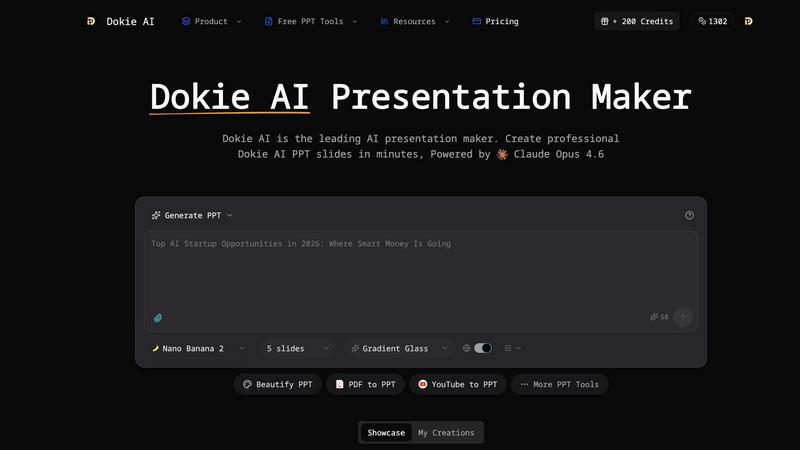
Discover how Dokie AI instantly creates professional presentations with advanced Claude Opus intelligence.
Last updated: March 19, 2026

Postproxy
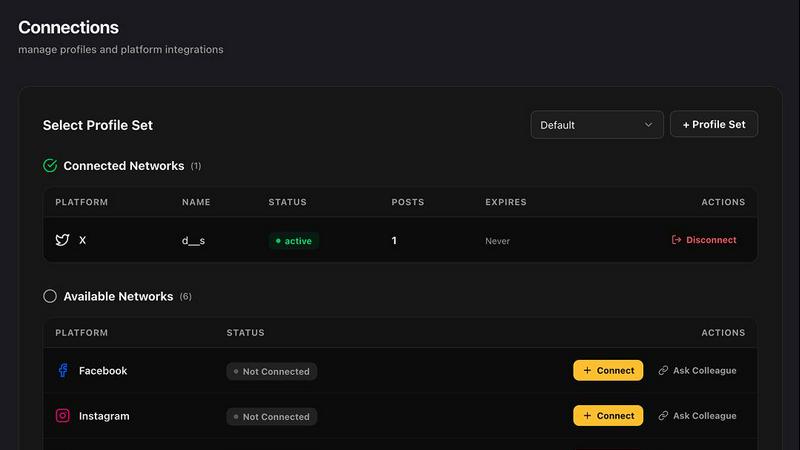
Discover how one API simplifies publishing to all your social networks.
Last updated: February 28, 2026
Visual Comparison
Dokie AI
Postproxy
Feature Comparison
Dokie AI
AI Generate PPT
Ever wondered what a professional designer would create from your raw notes? Describe your presentation topic in plain text, and Dokie AI's generator acts as your creative collaborator. It analyzes your description to build a complete, logically structured slide deck from scratch, complete with compelling headlines, balanced content, professionally selected layouts, and integrated visual elements like charts and icons. This feature turns abstract ideas into concrete, visually appealing narratives in minutes.
AI Beautify PPT
Have an existing presentation that feels flat or disjointed? The Beautify feature is like giving your slides an instant professional makeover. Simply upload your PowerPoint file, and Dokie AI's intelligence goes to work. It analyzes each slide's content to enhance the design, fix awkward layouts, apply consistent and stylish color palettes, and improve typography—all while meticulously preserving your original text and data. It’s the fastest path from a rough draft to a polished final product.
Multi-Format Conversion
What other hidden sources of content could become a presentation? Dokie AI unlocks the potential of your existing materials through versatile conversion tools. Transform PDF documents, Word files, HTML web pages, and even YouTube videos directly into editable PowerPoint presentations. This feature allows you to effortlessly repurpose a wide range of content formats into a unified, professional slide deck, saving hours of manual copying and reformatting.
Speech Notes & Reverse Prompt
How can you ensure a smooth delivery, and what can your old slides teach you? Dokie AI aids both presentation delivery and learning. The Speech Notes generator automatically creates detailed speaker notes and talking points for each slide, helping you present with confidence. Conversely, the innovative Reverse Prompt tool analyzes any uploaded presentation to extract the core creative prompts and structure, offering fascinating insights into effective slide design and content organization.
Postproxy
Unified Multi-Platform API
Imagine condensing the unique endpoints, authentication methods, and quirks of five major social networks into one consistent API call. Postproxy provides exactly that: a single POST request that intelligently routes and adapts your content to each specified platform. This eliminates the need to maintain separate SDKs or write custom integration code for Facebook, Instagram, and others, turning a complex web of APIs into one predictable interface for your publishing workflows.
Automated Platform Compliance & Adaptation
Each social network has its own secret language of rules—character limits, media formats, validation logic. Postproxy acts as a universal translator, automatically converting your content to match each platform's specific requirements. It handles the tedious normalization of AI-generated output, media formatting, and text validation behind the scenes, ensuring your post behaves correctly everywhere without manual tweaking.
Built-In Resilience and Delivery Guarantees
What happens when a platform API is flaky or you hit a rate limit? Instead of failing silently or requiring manual intervention, Postproxy is designed with operational resilience as a first-class feature. It manages automatic retries, respects and handles rate limits gracefully, maintains quota awareness, and provides explicit, clear reporting on publish states. You always know what succeeded, what failed, and why.
Centralized Authentication and Account Management
Navigating OAuth flows, token storage, and refresh cycles for multiple accounts and platforms is a significant overhead. Postproxy centralizes this complexity. You connect your social media accounts once, and it manages all platform permissions, secure token storage, and automatic token refreshes. This simplifies access control and eliminates the sprawl of managing credentials across dozens of pages or client accounts.
Use Cases
Dokie AI
Startup Pitch Deck Creation
For founders racing against the clock, crafting an investor pitch deck is critical yet time-consuming. With Dokie AI, you can input your business model, value proposition, and market data to generate a compelling, visually-driven pitch deck in minutes. This allows entrepreneurs to rapidly prototype and refine their story, ensuring they communicate professionalism and clarity to potential investors without getting bogged down in design details.
Educator & Student Projects
Educators and students can discover a new way to create engaging learning materials and project presentations. A teacher can quickly convert a lesson plan or a research PDF into an interactive slide deck for the classroom. Similarly, a student can describe their project thesis to generate a well-structured presentation, complete with citations and relevant imagery, allowing them to focus on deep learning rather than slide formatting.
Marketing & Sales Proposals
Marketing teams and sales professionals constantly need fresh, persuasive decks for campaigns, client proposals, and product launches. Dokie AI streamlines this by enabling the quick generation of on-brand presentations from campaign briefs or the beautification of existing sales collateral. This ensures every client-facing document is polished, consistent, and effectively communicates the intended message.
Corporate Reporting & Meetings
Professionals tasked with preparing weekly business reviews, quarterly reports, or strategy presentations can leverage Dokie AI to transform raw data and meeting notes into structured, executive-level decks. The tool's ability to create clear layouts and integrate visual data representation helps in distilling complex information into digestible and impactful slides for internal stakeholders.
Postproxy
AI-Powered Content Automation Pipelines
You're using LLMs or AI agents to generate compelling social content, but the final publishing step breaks the automation. Postproxy seamlessly integrates into these pipelines, providing a reliable endpoint that accepts AI-generated content, adapts it for each platform, and executes the publish command. This closes the loop, creating a fully automated content creation-to-publication system without manual formatting or platform-specific debugging.
Multi-Client Social Media Management Tools
Agencies and SaaS tools managing social media for multiple clients face immense complexity with account permissions and platform integrations. Postproxy simplifies this by acting as a unified backend. It allows you to manage connections for all client accounts in one place and publish to any combination of them through a single, stable API, drastically reducing development and maintenance overhead.
Event-Driven and Scheduled Publishing Workflows
For teams using automation platforms like n8n, Zapier, or Make, Postproxy becomes the crucial publishing module. Whether triggered by a new blog post (webhook), a scheduled time, or a database update, these workflows can now push content to social networks reliably. Postproxy handles the execution, retries, and status reporting, making these automations truly robust and hands-off.
Large-Scale Campaign and Product Launch Coordination
Launching a coordinated campaign across multiple social channels at a specific time is high-stakes. Postproxy provides the determinism needed for scale. You can queue thousands of posts, and the platform will manage the delivery, respecting platform quotas and limits, while giving you a clear, centralized view of the entire campaign's publish status, ensuring nothing gets lost or fails silently.
Overview
About Dokie AI
What if you could transform a simple idea into a stunning, boardroom-ready presentation in the time it takes to finish your coffee? Welcome to Dokie AI, a revolutionary AI presentation maker that reimagines the entire process of slide creation. At its core, Dokie AI is an intelligent design partner powered by Claude Opus 4.6, moving far beyond the limitations of static templates. It's built for business professionals, educators, marketers, and startup founders who need to communicate ideas powerfully but lack the time or design expertise to build polished decks from scratch. The platform's true magic lies in its ability to understand your content's intent and automatically handle the complex orchestration of structure, layout, typography, and visual harmony. Whether you're starting with a text prompt, an existing slide deck, or even a YouTube video, Dokie AI intelligently generates and refines professional presentations, freeing you to focus on your message and delivery. It’s not just a tool; it's an exploration into a new, more efficient way of creating visual stories.
About Postproxy
What if publishing to social media could be as reliable and predictable as sending an email? Postproxy is an exploration into turning that idea into reality. It's a unified API layer designed to transform the chaotic, fragmented process of multi-platform social media publishing into a stable piece of infrastructure. At its core, Postproxy acts as a single, intelligent endpoint that sits between your application and the ever-shifting APIs of platforms like Instagram, Facebook, YouTube, LinkedIn, and X. It's built for developers, automators, and teams who are tired of the hidden complexities—the platform bureaucracy, inconsistent rules, account sprawl, and operational failures that only reveal themselves at the worst possible moment. By abstracting away the need for platform-specific integrations, OAuth flows, rate limit handling, and content adaptation, Postproxy offers a consistent and reliable publishing contract. This allows you to focus on creating and routing content, whether it's generated by LLMs, triggered by CI/CD pipelines, or orchestrated in tools like n8n and Zapier, with the confidence that the "last mile" of delivery is handled with deterministic logic and clear reporting.
Frequently Asked Questions
Dokie AI FAQ
What makes Dokie AI different from template-based tools like Canva or PowerPoint?
Dokie AI fundamentally differs by using true generative AI (Claude Opus 4.6) to create dynamic, context-aware designs rather than forcing your content into pre-set templates. It doesn't just place text in boxes; it understands your content's narrative to intelligently structure the entire presentation, choose complementary layouts, and apply cohesive design principles automatically for a uniquely tailored result every time.
What file formats can I use with Dokie AI?
Dokie AI offers extensive format flexibility. You can start from a simple text prompt, upload existing PowerPoint (.ppt, .pptx) files for beautification, or convert from various source formats including PDF documents, Microsoft Word files (.doc, .docx), HTML web pages, and even YouTube video URLs. This makes it a central hub for presentation creation from almost any content source.
Does Dokie AI create the content for my slides, or do I provide it?
Dokie AI operates in two primary modes. In "Generate" mode, you provide a topic description, and the AI will generate both the structural outline and the written content for the slides. In "Beautify" and conversion modes, you provide the full content, and Dokie AI focuses exclusively on enhancing the design, layout, and visual styling while preserving your original text and data.
How does the Reverse Prompt feature work?
The Reverse Prompt feature is a unique learning and analysis tool. When you upload a presentation you admire, Dokie AI's AI examines the deck's structure, design choices, and content flow to deconstruct and infer the original creative prompts or instructions that might have been used to create it. This provides valuable insights into effective presentation design strategies.
Postproxy FAQ
What social media platforms does Postproxy support?
Postproxy currently provides a unified API for publishing to Instagram, Facebook, YouTube, LinkedIn, and X (formerly Twitter). The platform handles the unique API logic, content rules, and authentication requirements for each of these networks automatically, so you don't have to.
How does Postproxy handle platform API changes or failures?
A core value of Postproxy is maintaining a stable contract with its users. When social platforms update their APIs or experience outages, the Postproxy team manages the necessary adaptations on their side. Your integration remains unchanged. Furthermore, its built-in systems automatically retry failed publishes (where appropriate) and handle rate limits, insulating your workflows from common platform instability.
Is Postproxy suitable for publishing from LLM or AI-generated content?
Absolutely. This is a primary use case. Postproxy excels at taking raw, AI-generated output and automatically adapting it to meet the specific format, length, and media requirements of each target social platform. It turns the often-manual final step of formatting AI content into a fully automated process within your pipeline.
What does "explicit publish states" mean?
Unlike many direct API integrations where a post can silently fail or drop, Postproxy provides clear, deterministic feedback for every publish attempt. You will receive explicit status indicating success, failure, or queuing, along with reasons for any failures (e.g., "rate limit exceeded," "media format invalid"). This eliminates the need for manual checking and guesswork.
Alternatives
Dokie AI Alternatives
Dokie AI is a specialized AI presentation maker that automates the entire slide creation process. It belongs to the growing category of AI-powered design tools that help users generate professional content without requiring deep technical or design expertise. By using advanced AI to handle structure, layout, and visuals, it aims to save significant time for its users. People explore alternatives for various practical reasons. Budget considerations, such as finding a more affordable subscription or a different pricing model, are common drivers. Others might seek specific features not offered, require integration with a different platform or workflow, or simply want to compare the capabilities and output quality of different AI engines before committing. When evaluating other options, it's wise to consider the core AI model's strength and whether it creates truly original designs or merely populates templates. Look at the flexibility of input methods, the quality of visual output, and how much control you retain over the final product. Ultimately, the best tool aligns with your specific needs for automation, customization, and ease of use.
Postproxy Alternatives
Postproxy is a developer-centric tool in the social media automation category. It provides a single, unified API to publish content across major platforms like Instagram, Facebook, YouTube, LinkedIn, and X. This approach handles the complex backend work—OAuth, rate limits, and content formatting—so developers can focus on building their applications. Even with its robust offering, users often explore alternatives for various reasons. Needs can differ based on budget, with some requiring a different pricing model or a free tier with specific limits. Others might need support for niche social networks not covered or seek a different user experience, such as a full graphical dashboard instead of a primarily API-driven service. When evaluating other options, consider your core requirements. Key factors include the specific social platforms you need to support, the importance of API reliability and detailed analytics, and how the tool integrates into your existing workflow, whether that's through no-code platforms, custom code, or AI pipelines. The goal is to find a solution that turns social publishing from a chore into a seamless, automated part of your process.