
LuxSign vs Skene
Side-by-side comparison to help you choose the right AI tool.

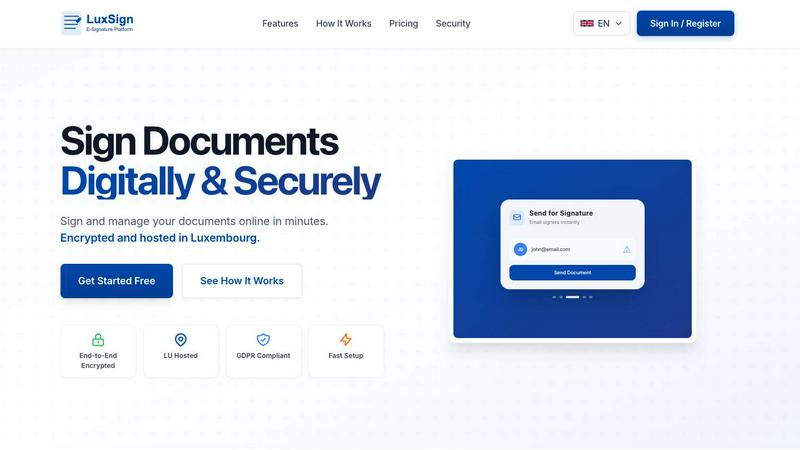
Effortlessly sign and manage your documents online with LuxSign's secure, EU-compliant electronic signature platform.
Last updated: February 28, 2026

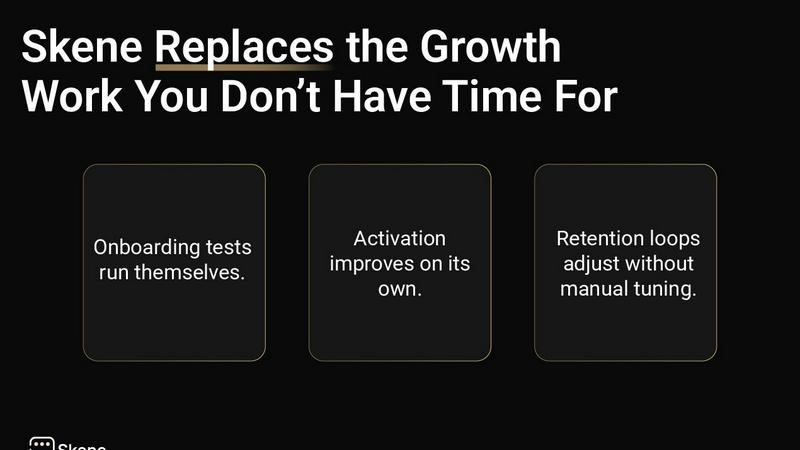
Skene transforms your codebase into a promptable growth engine you fully own.
Last updated: February 28, 2026
Visual Comparison
LuxSign
Skene
Feature Comparison
LuxSign
Multiple Signature Methods
LuxSign offers a variety of signature methods to accommodate different preferences. Users can draw their signature using a mouse, type their name, or upload an image of their signature. This flexibility ensures that every signer can choose the method that best suits them, enhancing user experience and efficiency.
Advanced Security
With LuxSign, security is paramount. The platform utilizes industry-standard encryption to protect documents during upload, storage, and transmission. Moreover, all data is housed in secure servers located in Luxembourg, ensuring compliance with EU data protection laws and providing peace of mind to users.
Collaboration Workspaces
LuxSign facilitates teamwork through its collaboration workspaces feature. Teams can create shared environments to organize documents into folders, manage access for team members, and collaborate seamlessly on signing workflows. This functionality not only enhances productivity but also ensures that all team members are aligned.
Complete Audit Trail
Transparency is a key aspect of LuxSign’s offering. The platform provides a complete audit trail, documenting every action taken on a document. Users can access detailed logs with timestamps, IP addresses, and signer information, ensuring compliance and enabling thorough verification of the signing process.
Skene
Codebase-Native Signal Detection
Skene integrates directly with your repository, performing a deep analysis of your source code to automatically detect growth signals. It scans your application's structure, understands user flows, and identifies key friction points and activation opportunities without you having to manually instrument events or define funnels. This creates a rich, contextual understanding of your product's growth potential derived from the very architecture of your software.
AI-Prompted Growth Implementation
Move beyond manual configuration. With Skene, you can instruct an AI agent to design and implement growth strategies using natural language prompts from your development environment. This allows you to rapidly prototype and deploy optimized onboarding sequences, lifecycle automations, and retention loops by simply describing the desired outcome, making sophisticated growth engineering accessible without requiring deep expertise.
Autonomous Iteration Engine
Skene operates as a continuous optimization layer. Once initial flows are established, the system autonomously runs experiments, analyzes user interaction data, and deploys improved versions of your growth loops. This creates a self-improving product where the mechanisms guiding user success evolve and refine themselves based on actual behavior, turning your app into a learning system.
Owned Growth Infrastructure
Replace brittle third-party scripts and black-box SaaS tools with code you own and control. Skene's framework integrates as a native part of your tech stack, ensuring your growth logic is version-controlled, performant, and modifiable. This eliminates data silos, preserves your application's performance, and allows your entire team—and your AI agents—to interact with and build upon your growth infrastructure.
Use Cases
LuxSign
Real Estate Transactions
In the realm of real estate, timely and secure document signing is crucial. LuxSign streamlines the process, allowing agents and clients to sign contracts quickly and securely, thereby expediting property transactions while ensuring compliance with legal requirements.
Human Resources Onboarding
HR departments can leverage LuxSign to simplify the onboarding process for new employees. By digitally signing contracts and policy documents, companies can reduce paperwork, enhance efficiency, and provide a secure method for managing sensitive information.
Financial Services Agreements
Financial institutions can use LuxSign to facilitate the signing of contracts and agreements with clients. The platform’s advanced security features ensure that sensitive financial documents are handled with the utmost care and in compliance with regulatory standards.
Legal Document Signing
Law firms can benefit from LuxSign’s robust features for signing legal documents. With the ability to track document progress in real-time and maintain a comprehensive audit trail, legal professionals can ensure that all documents are signed securely and efficiently.
Skene
Streamlining User Onboarding
For products struggling with low activation rates, Skene analyzes the signup and first-use journey directly from the code. It automatically identifies where users drop off and can generate, test, and deploy improved onboarding flows—like contextual guidance or progressive feature reveals—to dramatically increase the number of users who reach the "aha!" moment and realize core value.
Automating Customer Lifecycle Engagement
Instead of manually building email sequences or in-app messages, product teams can use Skene to create automated, behavior-triggered engagement loops. By understanding user actions from the codebase, Skene can prompt the implementation of nudges for feature adoption, re-engagement campaigns for inactive users, and success milestones that strengthen retention, all as native product experiences.
Optimizing for Product-Led Growth
Early-stage startups and indie developers can implement a sophisticated PLG motion without a large team. Skene acts as an automated growth co-pilot, handling the continuous cycle of identifying opportunities, hypothesizing improvements, and shipping experiments. This allows small teams to compete with the iterative power of much larger organizations by making data-driven optimization a core product function.
Reducing Friction in Key User Flows
For any application, pinpointing exactly where users encounter confusion or abandonment is challenging. Skene audits your code to visualize and understand critical user paths, such as checkout processes or complex feature workflows. It then suggests and can implement targeted optimizations to smooth out these journeys, directly improving conversion rates and user satisfaction.
Overview
About LuxSign
LuxSign is an innovative electronic signature platform designed to meet the stringent demands of businesses that prioritize security and compliance. Hailing from Luxembourg, LuxSign offers a secure, cloud-based environment for signing documents, ensuring that all files are encrypted end-to-end and stored exclusively within the country. This commitment to security is further reinforced by full compliance with GDPR, making it an ideal choice for organizations operating in Europe. With the capacity to support the eIDAS SES standards, LuxSign guarantees the legal validity of contracts across all EU member states. Its user-friendly interface empowers businesses to streamline their signing processes with features like parallel and sequential signing workflows, customizable signature fields, and automated notifications. Advanced capabilities such as document templates, detailed audit trails, and bulk signing options cater to the needs of larger teams, while its robust REST API allows for seamless integrations with existing systems. In essence, LuxSign is not just a tool, but a comprehensive solution for businesses seeking to enhance their document management and signature processes.
About Skene
What if your product could learn to grow itself? Skene is an AI-powered PLG (Product-Led Growth) infrastructure that fundamentally reimagines how software scales. It moves growth from being an external, manual afterthought to a core, intelligent layer of your product itself. Designed for indie developers, early-stage startups, and product-led companies, Skene is a fully automated iteration engine that allows you to scale your user base without the need to scale a dedicated, costly growth team. Its revolutionary premise is simple yet powerful: growth should be code you own, version, and prompt—not a fragile third-party script you paste into your application. By connecting directly to your codebase and IDE, Skene analyzes your source to intuitively understand user flows, detect points of friction, and identify hidden activation opportunities. It then autonomously creates, tests, and deploys optimized versions of critical growth loops for onboarding, activation, and retention. This transforms your application into a self-optimizing engine for user success, where growth mechanisms improve continuously based on real user behavior. Instead of wrestling with complex dashboards and manual A/B tests, you can simply prompt your AI agent to implement sophisticated growth strategies, making high-level optimization accessible directly from your development environment.
Frequently Asked Questions
LuxSign FAQ
What types of documents can I sign using LuxSign?
You can sign various document types, including PDF, DOC, and DOCX files. LuxSign also supports automatic conversion for seamless document handling.
Is LuxSign compliant with GDPR?
Yes, LuxSign is fully compliant with GDPR and Luxembourg data protection laws, ensuring that your documents and personal information are handled with the highest standards of privacy and security.
Can I integrate LuxSign with other applications?
Absolutely! LuxSign offers a full REST API and an embeddable SDK, allowing for seamless integrations with your existing systems and workflows.
How does LuxSign ensure document security?
LuxSign employs end-to-end encryption during the upload, storage, and transmission of documents. Additionally, all data is stored securely within Luxembourg, complying with EU regulations.
Skene FAQ
How is Skene different from traditional customer experience software?
Traditional tools like tour builders or analytics platforms require manual, brittle configuration on top of your UI. They often rely on CSS selectors that break with every code deploy and create siloed data. Skene is fundamentally different; it reads your actual codebase to understand your product's structure and automatically generates and maintains growth flows. When you update your code, Skene's understanding and implementations update in tandem, eliminating constant maintenance.
How long does it take to set up Skene?
Setup is designed to be incredibly fast, taking less than 60 seconds. You simply connect your GitHub or GitLab repository with read-only access. Skene then automatically analyzes your codebase to generate initial PLG insights and flows. No initial code changes or API modifications are required to get started and see value.
Is my source code secure with Skene?
Absolutely. Security is a primary concern. Skene only requires read-only access to your repository, meaning it cannot push or modify your code. All analysis occurs within a secure, isolated environment. Your proprietary code remains yours, and the growth logic Skene helps you build is deployed as code you own within your own infrastructure.
What kind of analytics and insights does Skene provide?
Skene offers a dashboard that provides real-time analytics on user progress, flow completion rates, and engagement metrics. It goes beyond surface-level data to identify specific bottlenecks in your journeys, track time-to-value, and measure the impact of each iterative change. This provides data-driven insights to continuously optimize your onboarding and growth loops.
Alternatives
LuxSign Alternatives
LuxSign is a sophisticated electronic signature platform originating from Luxembourg, designed specifically for businesses that prioritize high compliance standards. As a solution compliant with eIDAS SES, LuxSign ensures that signatures are legally recognized throughout all EU member states, making it a reliable choice for organizations operating in diverse regulatory environments. However, users often seek alternatives due to factors such as pricing models, the breadth of features, or specific platform requirements that may better align with their operational needs. When searching for an alternative to LuxSign, it is essential to consider the specific functionalities that your business requires. Look for features such as user-friendly interfaces, robust security measures, compliance with legal standards, and integration capabilities with existing systems. Additionally, evaluating the cost-effectiveness and scalability of the alternatives can help ensure that you select a platform that not only meets your current needs but also supports future growth.
Skene Alternatives
Skene is an AI-powered product-led growth infrastructure, a category of tools designed to automate and optimize user acquisition and retention directly within your product. It works by integrating with your codebase to analyze user flows and autonomously test improvements, turning your application into a self-optimizing engine. Users often explore alternatives for various reasons. Some may seek a different pricing model or a more traditional, dashboard-driven analytics approach. Others might need a solution that integrates with a specific tech stack or offers a different balance between automation and manual control. The needs of a large enterprise can differ greatly from those of an indie developer. When evaluating options, consider how deeply the tool understands your product. Does it work with surface-level events or can it derive intent from your actual code? Look at the level of automation: does it just provide insights, or can it implement and test changes? Finally, assess ownership—is the growth logic embedded in your code, or is it dependent on an external, black-box service?