
HookMesh vs qtrl.ai
Side-by-side comparison to help you choose the right AI tool.

Simplify your SaaS with HookMesh for reliable webhook delivery, automatic retries, and a self-service customer portal.
Last updated: February 28, 2026

qtrl.ai
qtrl.ai empowers QA teams to scale testing with AI while ensuring control, governance, and seamless integration.
Last updated: March 4, 2026
Visual Comparison
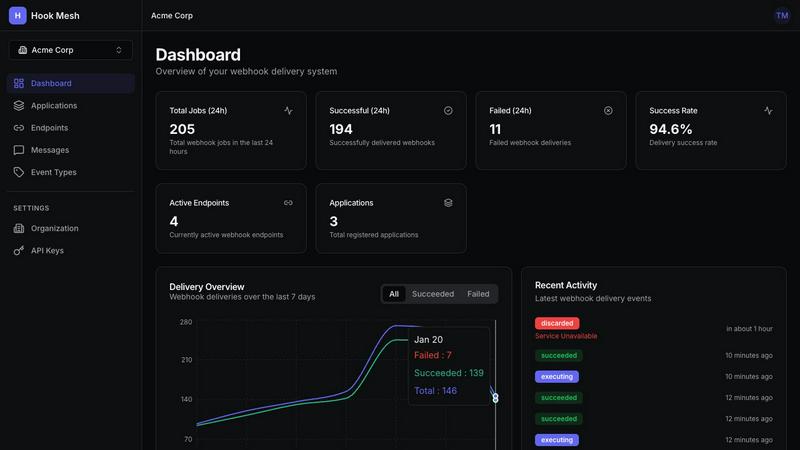
HookMesh
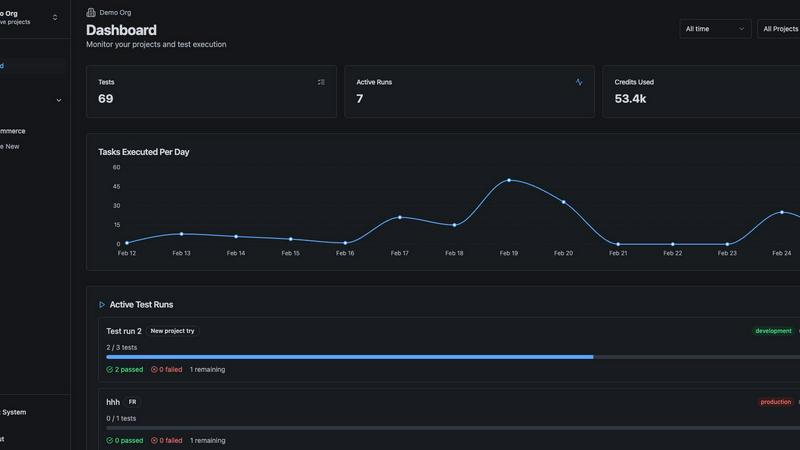
qtrl.ai
Feature Comparison
HookMesh
Reliable Delivery
HookMesh ensures that webhook events are never lost, implementing automatic retries that utilize exponential backoff with jitter. This means that if a delivery fails, HookMesh will retry for up to 48 hours, ensuring that your customers receive their notifications without fail. This level of reliability is crucial for maintaining trust and ensuring that important updates are communicated effectively.
Customer Portal
Empowering users is at the heart of HookMesh. The embedded self-service portal allows customers to manage their endpoints effortlessly. They can add new endpoints, view detailed delivery logs, and replay failed webhooks with just one click. This transparency not only improves the user experience but also minimizes the need for constant support intervention.
Developer Experience
The developer experience is streamlined with HookMesh's REST API and SDKs available for JavaScript, Python, and Go. This means developers can integrate webhook functionalities quickly and efficiently. With just a few lines of code, they can start sending webhook events, allowing teams to ship products faster without getting bogged down in the intricacies of webhook implementation.
Integration in Minutes
HookMesh makes it incredibly easy to send webhook events from applications. By simply installing the SDK, initializing it with an API key, and using a single function call to send events, developers can bypass the traditional hurdles associated with webhook delivery. This ease of integration is a game changer for teams looking to implement reliable webhooks without extensive overhead.
qtrl.ai
Autonomous QA Agents
qtrl.ai's Autonomous QA Agents execute instructions on demand or continuously, allowing teams to run tests across multiple environments at scale. These agents operate within user-defined rules and ensure real browser execution rather than simulations, enabling reliable testing outcomes.
Enterprise-Grade Test Management
The platform offers a centralized repository for managing test cases, plans, and runs, providing full traceability and audit trails. With manual and automated workflows integrated, qtrl.ai is built to meet compliance standards and facilitate robust governance.
Progressive Automation
Teams can start with human-written instructions and progressively move to AI-generated tests when they feel ready. qtrl.ai suggests new tests based on coverage gaps, allowing teams to review, approve, and refine tests at every step of the automation journey.
Adaptive Memory
qtrl.ai features Adaptive Memory, which builds a living knowledge base of the application. It learns from exploration, test execution, and issues, powering smarter and context-aware test generation that improves with every interaction, ensuring continuous enhancement of the testing process.
Use Cases
HookMesh
E-commerce Transactions
E-commerce platforms can leverage HookMesh to send real-time notifications about order status, payment confirmations, and shipping updates. The reliable delivery ensures that customers are always informed, enhancing their shopping experience and fostering trust in the platform.
SaaS Application Updates
For SaaS applications, timely updates are critical. HookMesh can be used to notify users about new features, system maintenance, or changes in account status. This level of communication helps maintain user engagement and satisfaction.
Payment Processing
Payment gateways can utilize HookMesh to deliver instant payment notifications to merchants and customers. With guaranteed delivery and the ability to replay failed webhooks, businesses can ensure they do not miss critical transaction updates.
Customer Support Notifications
Companies can integrate HookMesh to send alerts for customer support tickets, ensuring that users receive timely updates on their inquiries or issues. This improves the overall customer service experience and fosters stronger relationships with users.
qtrl.ai
Product-Led Engineering Teams
Product-led engineering teams can leverage qtrl.ai to scale their quality assurance efforts without losing control. The platform enables them to manage tests efficiently while gradually adopting automation, ensuring that product quality remains a top priority.
QA Teams Transitioning from Manual Testing
For QA teams moving beyond manual testing, qtrl.ai provides a structured approach to integrate automation seamlessly. Teams can start with simple test management and evolve to utilize AI-driven agents, making the transition smoother and more efficient.
Companies Modernizing Legacy Workflows
Organizations looking to modernize their legacy QA workflows can benefit from qtrl.ai's comprehensive features. The platform supports existing tools, allowing teams to integrate modern testing practices without disrupting established processes.
Enterprises Requiring Governance and Traceability
Enterprises that demand strict compliance and audit trails will find qtrl.ai perfectly suited to their needs. With full traceability and robust governance features, teams can ensure that their quality assurance processes meet regulatory requirements while maintaining high standards.
Overview
About HookMesh
HookMesh is an advanced solution crafted to simplify and enhance webhook delivery for contemporary SaaS products. This platform addresses the intricate challenges associated with building webhooks in-house, such as implementing robust retry logic, managing circuit breakers, and resolving delivery issues. Designed with developers and product teams in mind, HookMesh allows businesses to concentrate on their core offerings without being hindered by the technical complexities of webhook management. The platform boasts battle-tested infrastructure that guarantees reliable delivery through automatic retries, exponential backoff mechanisms, and idempotency keys, ensuring that events are delivered consistently. Furthermore, HookMesh features a self-service portal that empowers customers with easy endpoint management and visibility, enabling them to replay failed webhooks with a single click. This makes HookMesh the preferred choice for organizations seeking a seamless webhook strategy, ultimately providing peace of mind in the digital transaction landscape.
About qtrl.ai
qtrl.ai is a cutting-edge quality assurance platform designed to empower software teams to enhance their QA processes without compromising control or governance. By combining enterprise-grade test management with intelligent AI automation, qtrl.ai offers a holistic solution for managing software quality. It serves as a centralized hub where teams can efficiently organize test cases, plan test runs, and trace requirements to ensure comprehensive coverage. With real-time dashboards, qtrl.ai provides visibility into testing outcomes, helping engineering leads and QA managers identify potential risks swiftly. What sets qtrl.ai apart is its progressive AI layer, which allows teams to gradually adopt automation. Starting from manual test management, teams can evolve to leverage autonomous agents that generate, maintain, and execute UI tests seamlessly across various environments. This adaptability makes qtrl.ai ideal for product-led engineering teams, QA groups transitioning from manual testing, organizations modernizing legacy workflows, and enterprises that require stringent compliance and audit trails. Ultimately, qtrl.ai aims to bridge the gap between the slow pace of manual testing and the complexities of traditional automation, facilitating a trusted path to faster, more intelligent quality assurance.
Frequently Asked Questions
HookMesh FAQ
What types of integrations does HookMesh support?
HookMesh supports integrations through its REST API and SDKs for popular programming languages such as JavaScript, Python, and Go. This ensures that developers can easily incorporate webhook functionality into their applications.
How does HookMesh handle delivery failures?
HookMesh employs automatic retries with exponential backoff to handle delivery failures. If an endpoint does not respond, HookMesh will retry delivering the webhook for up to 48 hours, ensuring that no events are lost.
Can users manage their own webhook endpoints?
Yes, HookMesh provides a self-service customer portal where users can easily manage their webhook endpoints. They can add new endpoints, view delivery logs, and replay any failed webhooks with one click.
Is there a free tier available for HookMesh?
Absolutely! HookMesh offers a free tier that includes 5,000 webhooks per month with no credit card required. This allows users to explore the platform and its capabilities before committing to a paid plan.
qtrl.ai FAQ
What makes qtrl.ai different from traditional QA tools?
qtrl.ai uniquely combines enterprise-grade test management with a progressive AI layer, allowing teams to gradually adopt automation while maintaining control. This approach mitigates the risks associated with traditional "black-box" AI systems.
Can qtrl.ai integrate with existing tools?
Yes, qtrl.ai is designed to work seamlessly with existing tools and workflows. This adaptability facilitates the modernization of QA practices without disrupting current processes, ensuring a smooth transition for teams.
How does qtrl.ai ensure test execution across different environments?
qtrl.ai allows teams to run tests across various environments, including development, testing, staging, and production. It supports per-environment variables and encrypted secrets, ensuring security and consistency in test execution.
Is it easy to scale QA efforts with qtrl.ai?
Absolutely. qtrl.ai is built for scalability, enabling teams to manage test cases, automate execution, and explore autonomous QA at their own pace. This flexibility allows teams to enhance their QA processes without compromising oversight or governance.
Alternatives
HookMesh Alternatives
HookMesh is an innovative solution in the development category, specifically designed to streamline webhook delivery for modern SaaS applications. It addresses the technical complexities involved in building and managing webhooks in-house, allowing businesses to focus on their core offerings. Users often seek alternatives due to factors like pricing, feature sets, scalability, and specific platform needs that may not align with what HookMesh provides. When looking for an alternative to HookMesh, consider the reliability of webhook delivery, the availability of a self-service customer portal, and the ease of integration with your existing systems. Additionally, evaluate the support for features like automatic retries and idempotency keys, as well as the overall user experience and transparency in managing webhook events.
qtrl.ai Alternatives
qtrl.ai is a cutting-edge quality assurance platform designed to help software teams enhance their testing processes through a blend of AI-powered automation and traditional test management. This innovative tool allows QA professionals to scale their efforts while maintaining full control and governance, making it an invaluable asset for product-led engineering teams and enterprises with strict compliance needs. Users often seek alternatives to qtrl.ai for various reasons, including pricing structures, feature sets, and unique platform requirements that may not align with qtrl.ai's offerings. When exploring alternatives, it’s essential to consider aspects such as ease of integration, the scalability of automation features, the ability to maintain control over testing processes, and any specific compliance or reporting needs that your organization may have.