
BRCKS vs CloudBurn
Side-by-side comparison to help you choose the right AI tool.

Discover how BRCKS seamlessly unites your entire construction team and project updates directly within WhatsApp.
Last updated: April 4, 2026

CloudBurn
Discover what your code changes will cost before they deploy to production.
Last updated: March 1, 2026
Visual Comparison
BRCKS
CloudBurn
Feature Comparison
BRCKS
BRCKS Bot for WhatsApp
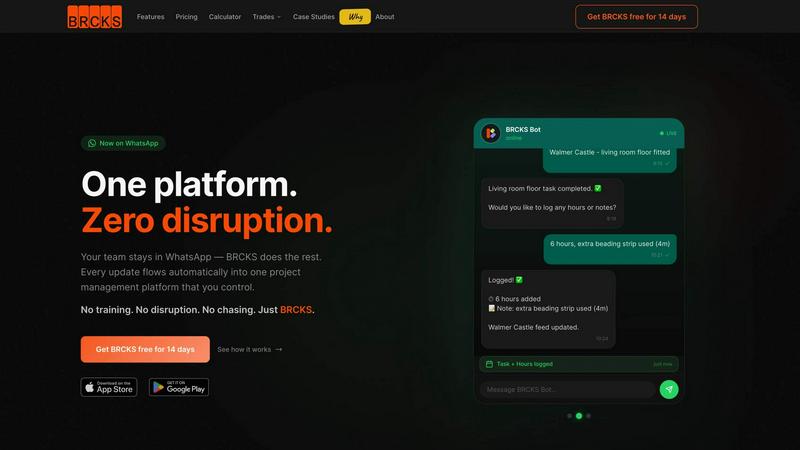
Imagine updating your entire project management system without ever leaving your favourite messaging app. The BRCKS Bot makes this a reality. Your team can continue communicating naturally on WhatsApp, and the Bot automatically channels those updates—new tasks, completed checklists, photo evidence—directly into the BRCKS platform. This means zero disruption to existing workflows, no mandatory app switching for on-site crews, and a seamless bridge between casual conversation and formal project tracking.
Free Subcontractor Access
One of the biggest hurdles in construction software is getting every trade on board. BRCKS removes this barrier entirely. You can invite all your subcontractors to their relevant projects, granting them full access to checklists, calendars, files, and schedules without charging them a penny. You only pay for your core internal team members. This encourages universal adoption, ensures everyone is working from the same information, and fosters true collaboration across the entire project ecosystem.
Dedicated Client Portal
Keeping clients informed without overwhelming them or giving them access to internal tools is a delicate balance. The BRCKS Client Portal solves this elegantly. It provides homeowners and clients with a beautiful, read-only window into their project's progress. They can view milestone updates, see the latest site photos, and track high-level advancements, all while your team's internal communications and task management remain private and secure.
Unified Project Feed
Curious about what happened on site today? Instead of piecing together snippets from multiple sources, the BRCKS Feed acts as a central nervous system for your project. It aggregates all updates, task completions, file uploads, and notes into a single, chronological timeline. This gives project managers and team members an instant, comprehensive overview of project activity, making it effortless to stay informed and spot potential issues before they escalate.
CloudBurn
Automated Pull Request Cost Analysis
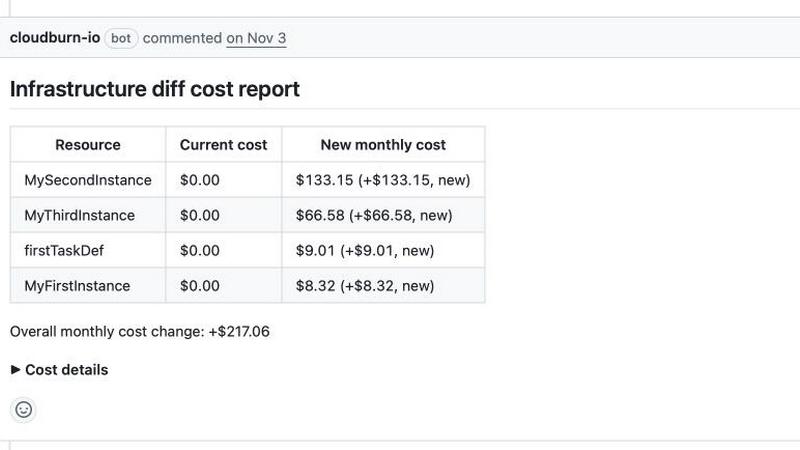
Imagine every infrastructure change being automatically audited for its financial impact. CloudBurn integrates directly with your GitHub workflow to analyze the diff in every pull request. Using live AWS pricing data, it calculates the exact monthly cost delta of your proposed changes and posts a clear, itemized report as a comment. This happens within seconds, turning cost awareness into a natural, non-disruptive part of your team's review process without any manual intervention.
Real-Time AWS Pricing Intelligence
How can you trust a cost estimate if it's based on outdated data? CloudBurn eliminates this uncertainty by pulling the very latest pricing information directly from AWS. This ensures that every cost projection for resources like EC2 instances, Fargate tasks, or RDS databases is accurate and reflective of current on-demand rates, giving you confidence that the numbers you see are the numbers you'll get.
Seamless Integration with Terraform & AWS CDK
Wondering how to fit a new tool into your existing IaC workflow? CloudBurn is designed to work natively with the tools you already use. By simply adding a GitHub Action for either Terraform Plan or AWS CDK Diff, you connect your pipeline. The tool automatically detects the output, sends it for analysis, and delivers the cost report, requiring no changes to your core development practices or codebase.
Detailed, Actionable Cost Breakdowns
A single total cost figure is helpful, but what if you need to understand the why behind it? CloudBurn provides granular, line-item breakdowns for every resource change. You can see the hourly rate, usage type, and a plain-language description for each component, enabling developers to make informed optimization decisions, like downsizing an over-provisioned instance, right during the code review.
Use Cases
BRCKS
Streamlining Daily Site Coordination
For site managers drowning in a flood of WhatsApp messages and emails, BRCKS becomes the command centre. Daily tasks are assigned via clear checklists, progress is confirmed with photos uploaded directly to the relevant task, and urgent queries are handled in a dedicated team chat, separate from personal messages. This consolidates all site coordination into one searchable platform, saving hours previously spent chasing updates and reconciling information from different sources.
Enhancing Subcontractor Collaboration
When coordinating multiple trades, miscommunication is a major risk. With BRCKS, a main contractor can create a shared schedule and task list accessible to all subcontractors for free. The electrician can see when the first fix plumbing is scheduled for completion, and the carpenter can upload photos of a potential issue for the architect to review. This transparency reduces scheduling conflicts, minimizes rework, and ensures all parties are aligned on the project sequence.
Improving Client Communication and Trust
For builders aiming to provide an exceptional client experience, BRCKS offers a powerful tool. Instead of sporadic email updates, clients receive automatic notifications when key milestones are reached or new photos are added to their portal. This proactive, transparent communication keeps clients feeling involved and informed, building trust and reducing anxiety throughout the construction process, ultimately leading to higher satisfaction and fewer stressful calls.
Creating a Definitive Project Record
From a compliance and dispute-resolution perspective, BRCKS serves as an invaluable digital paper trail. Every decision discussed in a meeting, every instruction given, and every site condition documented with a photo is timestamped and stored in one permanent location. This clear record protects all parties by providing an unambiguous history of the project, which is crucial for final sign-offs, warranty discussions, and resolving any post-project queries.
CloudBurn
Preventing Costly Misconfigurations in PR Reviews
The most effective way to manage cloud spend is to stop it at the source. Engineering teams use CloudBurn to catch expensive mistakes—like accidentally provisioning a dozen xlarge instances instead of micros—before the code merges. This shifts cost governance left, empowering developers with the data to self-correct and preventing heart-stopping surprises on the monthly invoice.
Enabling Data-Driven Architecture Discussions
How often do design debates hinge on performance but ignore cost? With CloudBurn, teams can elevate their architectural discussions. When proposing a new microservices design or database solution, the immediate cost impact is visible to everyone in the PR. This allows for balanced conversations that consider both technical merit and financial sustainability from the earliest stages.
Streamlining FinOps and Budget Forecasting
For platform and FinOps teams, manually forecasting the cost of upcoming projects is a tedious chore. CloudBurn automates this estimation process. By analyzing the infrastructure code slated for development, teams can generate accurate, code-based forecasts, improving budget accuracy and providing clear financial accountability for each project or feature team.
Educating Developers on Cloud Cost Implications
Many developers write infrastructure code without a clear understanding of the financial weight of their decisions. CloudBurn acts as a continuous learning tool. With every PR comment, developers receive immediate feedback on the cost consequences of their code, fostering a culture of cost consciousness and building institutional knowledge over time.
Overview
About BRCKS
What if you could capture the chaotic energy of a construction site—the flurry of WhatsApp messages, the emailed photos, the scribbled meeting notes—and transform it into a clear, actionable plan? BRCKS is the answer to that very question. It's a specialised construction project management and communication platform built from the ground up for the real world of residential building. Designed for builders, tradespeople, and homeowners alike, BRCKS tackles the fundamental problem of scattered information. It provides a single, unified hub where project conversations, critical checklists, assigned tasks, essential files, site photos, and key decisions naturally converge. This eliminates the frantic search through disconnected emails, text threads, and scattered documents, ensuring nothing vital gets lost in the digital shuffle. The core value proposition is profound simplicity: organise day-to-site communication, track every action to completion, share transparent updates with clients, and maintain an indisputable record of the project's journey—all through a tool that feels practical and intuitive for teams who are more familiar with a hammer than a help desk.
About CloudBurn
What if you could peer into the financial future of your infrastructure code before it ever runs? CloudBurn is a transformative tool designed for engineering teams who use Terraform or AWS CDK to manage their cloud infrastructure. It addresses a critical, often painful gap in the development lifecycle: the disconnect between writing infrastructure-as-code and understanding its cost implications. Traditionally, teams discover budget overruns weeks later on their AWS bill, long after resources are provisioned and costs are accumulating. CloudBurn fundamentally changes this dynamic by injecting real-time cost intelligence directly into the code review process. Whenever a developer opens a pull request with infrastructure changes, CloudBurn automatically analyzes the diff using live AWS pricing data and posts a detailed cost report as a comment. This creates a powerful feedback loop, empowering teams to discuss, optimize, and adjust expensive configurations while the changes are still in development and easy to modify. It’s a proactive shield against budgetary surprises, transforming cost management from a reactive, finance-led scramble into an integrated, engineering-led practice. It’s for any team that has ever wondered, "How much will this new architecture actually cost?" and wants an immediate, accurate answer.
Frequently Asked Questions
BRCKS FAQ
How does BRCKS work with WhatsApp?
BRCKS integrates with WhatsApp through the intelligent BRCKS Bot. Your team members can simply send messages, photos, or voice notes to the Bot as they would to a person. The Bot understands the context and automatically files these updates into the correct project, task, or checklist within the BRCKS platform. Your team stays in their familiar WhatsApp environment, while you gain all the benefits of structured project management.
Is it really free for subcontractors?
Yes, absolutely. There is no cost for subcontractors to use BRCKS on the projects you invite them to. They receive full access to view and update their assigned tasks, checklists, schedules, and relevant project files. This policy is designed to eliminate the cost barrier and encourage complete adoption across your entire supply chain, ensuring everyone is connected.
What can clients see in their portal?
The Client Portal provides a curated, read-only view specifically designed for homeowners. Clients can see project milestones, a timeline of key events, photo galleries of progress, and general status updates that you choose to share. They cannot see internal team chats, financial information, or the detailed task management system, keeping your operational workflow private.
Do we need to train our team to use BRCKS?
BRCKS is built to require minimal to no formal training, especially for on-site teams. Since much of the interaction can happen through the familiar interface of WhatsApp via the BRCKS Bot, the learning curve is incredibly shallow. The web and app platforms are designed with simplicity and practicality in mind, using terminology and workflows that are intuitive for construction professionals.
CloudBurn FAQ
How does CloudBurn calculate the cost estimates?
CloudBurn calculates estimates by parsing the infrastructure diff from your Terraform plan or AWS CDK synthesis output. It identifies the specific AWS resources being added, modified, or removed. Then, it cross-references these resources with real-time pricing data from AWS's own pricing API, applying the appropriate rates based on region, instance type, and other configurations to generate a projected monthly cost.
Is my code or cloud credentials exposed to CloudBurn?
No, your sensitive code and AWS credentials remain secure within your GitHub environment. CloudBurn operates by receiving only the textual output of your terraform plan or cdk diff command via a GitHub Action. Your actual Terraform state files, AWS access keys, or repository code are never transmitted to CloudBurn's servers, ensuring a secure and compliant workflow.
What infrastructure-as-code tools does CloudBurn support?
Currently, CloudBurn offers dedicated, seamless support for two of the most popular IaC frameworks: HashiCorp Terraform and the AWS Cloud Development Kit (AWS CDK). Support is implemented through easy-to-use GitHub Actions that capture the plan or diff output specific to each tool, making integration straightforward for teams using either standard.
Can CloudBurn analyze costs for existing infrastructure?
The primary focus of CloudBurn is on analyzing changes—the diff in a pull request. It is designed for pre-deployment cost visibility. For comprehensive cost management and analysis of your already-deployed, full infrastructure stack, you would typically use a cloud provider's native cost tool (like AWS Cost Explorer) or a dedicated cloud cost management platform.
Alternatives
BRCKS Alternatives
BRCKS is a specialized construction project management and communication platform. It falls into the category of productivity and management software, designed specifically to organize the day-to-day chaos of residential construction sites. By centralizing conversations, tasks, files, and photos, it aims to replace scattered tools like WhatsApp and email. Users often explore alternatives for various practical reasons. These can include budget considerations, the need for different feature sets, or specific requirements like integration with other business systems. Some teams might also seek solutions tailored to different project scales or types beyond residential building. When evaluating other options, it's wise to consider a few key areas. Look for core functionality that streamlines site communication and task tracking. Security and data ownership are crucial, as is overall ease of adoption for your entire team, from tradespeople to homeowners. The right tool should feel practical and solve the specific communication gaps you're experiencing.
CloudBurn Alternatives
CloudBurn is a specialized tool in the development and DevOps category, designed to bring real-time cloud cost intelligence directly into the infrastructure-as-code workflow. It analyzes Terraform or AWS CDK changes in pull requests to forecast AWS costs before code ever reaches production, transforming cost management from a reactive finance task into a proactive engineering practice. Users often explore alternatives for various reasons. Some may seek different pricing models or have budget constraints that require a more basic solution. Others might need support for additional cloud providers beyond AWS, or require deeper integration with CI/CD platforms other than GitHub. The specific feature set, such as the depth of cost analysis or reporting capabilities, can also drive the search for a different tool. When evaluating options, it's wise to consider a few key areas. Look for accurate, up-to-date pricing data that reflects your actual usage and regions. Seamless integration into your existing developer workflow is crucial for adoption, ensuring the tool provides value without becoming a burden. Finally, consider the clarity and actionability of the insights provided; the best tools empower teams to make informed decisions quickly, right where they code.