
Blueberry vs HookMesh
Side-by-side comparison to help you choose the right AI tool.

Blueberry
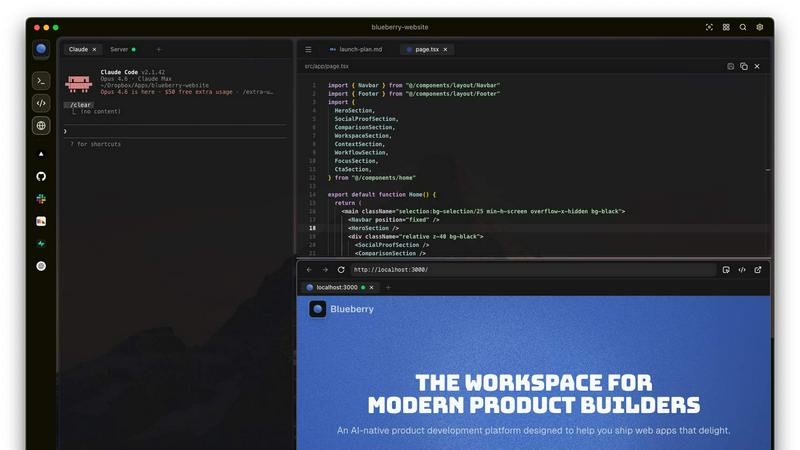
Blueberry is an AI-native Mac workspace that combines your editor, terminal, and browser for seamless product building.
Last updated: February 28, 2026

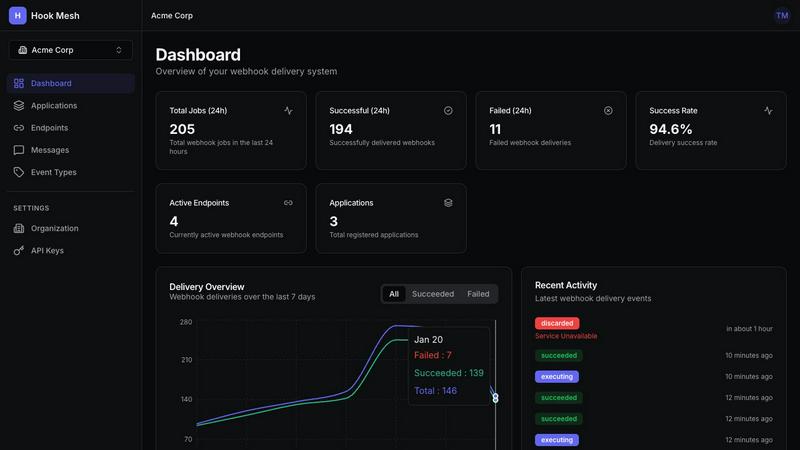
Simplify your SaaS with HookMesh for reliable webhook delivery, automatic retries, and a self-service customer portal.
Last updated: February 28, 2026
Visual Comparison
Blueberry
HookMesh
Feature Comparison
Blueberry
Unified AI-Native Workspace
Blueberry consolidates your editor, terminal, and browser into one seamless, distraction-free window. This isn't just about putting panels side-by-side; it's about creating a cohesive environment where each component is aware of the others. The integrated design ensures that your workflow remains fluid, eliminating the cognitive load of managing multiple applications and allowing you to ship products faster from a single, powerful hub designed for modern development.
Live AI Context via MCP
This is the core intelligence of Blueberry. Its built-in MCP server acts as the nervous system, giving your connected AI model (like Claude or Codex) real-time, read-only access to your entire workspace context. The AI can see your open files, monitor terminal output, and observe the live browser preview simultaneously. This creates a paradigm shift where your AI assistant has full situational awareness, enabling it to provide accurate, context-rich suggestions and answers without you ever needing to manually provide snippets or screenshots.
Pinned Apps & Visual Context
Extend your workspace's intelligence beyond code. Blueberry allows you to dock essential web apps like GitHub, Linear, Figma, or PostHog directly within the interface. These pinned apps load with your project and share context with your AI. Furthermore, you can provide visual context by capturing screenshots or using an element selector directly from the preview browser, allowing your AI to understand UI issues or design intentions at a glance.
Professional-Grade Editor & Multi-Device Preview
You don't compromise on editing power. Blueberry includes a full-featured code editor with syntax highlighting, multi-cursor support, find/replace, and Git integration. Alongside it, the preview browser isn't basic—it offers built-in views for desktop, tablet, and mobile screens. This lets you instantly see how your application renders and behaves across different devices without leaving your workspace, ensuring what you build delights every user.
HookMesh
Reliable Delivery
HookMesh ensures that webhook events are never lost, implementing automatic retries that utilize exponential backoff with jitter. This means that if a delivery fails, HookMesh will retry for up to 48 hours, ensuring that your customers receive their notifications without fail. This level of reliability is crucial for maintaining trust and ensuring that important updates are communicated effectively.
Customer Portal
Empowering users is at the heart of HookMesh. The embedded self-service portal allows customers to manage their endpoints effortlessly. They can add new endpoints, view detailed delivery logs, and replay failed webhooks with just one click. This transparency not only improves the user experience but also minimizes the need for constant support intervention.
Developer Experience
The developer experience is streamlined with HookMesh's REST API and SDKs available for JavaScript, Python, and Go. This means developers can integrate webhook functionalities quickly and efficiently. With just a few lines of code, they can start sending webhook events, allowing teams to ship products faster without getting bogged down in the intricacies of webhook implementation.
Integration in Minutes
HookMesh makes it incredibly easy to send webhook events from applications. By simply installing the SDK, initializing it with an API key, and using a single function call to send events, developers can bypass the traditional hurdles associated with webhook delivery. This ease of integration is a game changer for teams looking to implement reliable webhooks without extensive overhead.
Use Cases
Blueberry
Rapid Prototyping & Iteration
When speed is essential, Blueberry accelerates the build-measure-learn loop. You can write code, see changes live in the preview, debug terminal output, and ask your AI for implementation advice or bug fixes—all without switching contexts. This tight integration is perfect for quickly mocking up features, experimenting with new libraries, or iterating on UI components based on immediate visual feedback.
AI-Powered Debugging & Explanation
Stuck on a cryptic error in the terminal or complex logic in your route handler? Simply ask your AI assistant. Because it sees the exact error output and the relevant code files, it can diagnose issues with remarkable accuracy. You can also ask "how does this file work?" and receive an explanation grounded in the actual codebase, turning debugging from a frustrating hunt into an interactive learning session.
Cross-Platform UI Development
Building responsive web applications requires constant checking across screen sizes. With Blueberry's integrated multi-device preview, you can write a CSS rule and immediately toggle between desktop, tablet, and phone views to verify its effect. This seamless context switch ensures your UI is robust and responsive from the very first line of styling, streamlining the front-end development process.
Onboarding & Codebase Exploration
New to a project? Use Blueberry as your exploration companion. Open the repository, and let your AI assistant tour you through the codebase. Ask questions like "What's the main data flow here?" or "How is authentication handled?" The AI, with its live access to the entire file structure and code, can provide specific, guided answers, dramatically reducing the time it takes to understand and contribute to a new codebase.
HookMesh
E-commerce Transactions
E-commerce platforms can leverage HookMesh to send real-time notifications about order status, payment confirmations, and shipping updates. The reliable delivery ensures that customers are always informed, enhancing their shopping experience and fostering trust in the platform.
SaaS Application Updates
For SaaS applications, timely updates are critical. HookMesh can be used to notify users about new features, system maintenance, or changes in account status. This level of communication helps maintain user engagement and satisfaction.
Payment Processing
Payment gateways can utilize HookMesh to deliver instant payment notifications to merchants and customers. With guaranteed delivery and the ability to replay failed webhooks, businesses can ensure they do not miss critical transaction updates.
Customer Support Notifications
Companies can integrate HookMesh to send alerts for customer support tickets, ensuring that users receive timely updates on their inquiries or issues. This improves the overall customer service experience and fosters stronger relationships with users.
Overview
About Blueberry
What if your entire development environment could think alongside you? Blueberry is an AI-native product development platform for macOS that reimagines the modern builder's workspace. It elegantly unifies the three core tools—a sophisticated code editor, a powerful terminal, and a live preview browser—into a single, focused application. This eliminates the constant, distracting juggle of windows and applications, allowing you to maintain deep focus on creating and shipping web applications. Designed for modern product builders, from indie hackers to engineering teams, Blueberry's true magic lies in its context-aware AI integration. By connecting to models like Claude, Gemini, or Codex via its built-in MCP (Model Context Protocol) server, your AI assistant gains a live, holistic view of your entire project: the code you're writing, the terminal output, and the real-time browser preview. This means you can stop the tedious copy-pasting of context and start having meaningful, informed conversations with AI that understands exactly what you're building, as you build it. It's more than a tool; it's a collaborative partner for your development flow.
About HookMesh
HookMesh is an advanced solution crafted to simplify and enhance webhook delivery for contemporary SaaS products. This platform addresses the intricate challenges associated with building webhooks in-house, such as implementing robust retry logic, managing circuit breakers, and resolving delivery issues. Designed with developers and product teams in mind, HookMesh allows businesses to concentrate on their core offerings without being hindered by the technical complexities of webhook management. The platform boasts battle-tested infrastructure that guarantees reliable delivery through automatic retries, exponential backoff mechanisms, and idempotency keys, ensuring that events are delivered consistently. Furthermore, HookMesh features a self-service portal that empowers customers with easy endpoint management and visibility, enabling them to replay failed webhooks with a single click. This makes HookMesh the preferred choice for organizations seeking a seamless webhook strategy, ultimately providing peace of mind in the digital transaction landscape.
Frequently Asked Questions
Blueberry FAQ
What is MCP and why is it important?
MCP stands for Model Context Protocol, an open standard developed by Anthropic. It's crucial because it provides a secure, structured way for AI models to access tools and data. In Blueberry, the built-in MCP server safely exposes your workspace's context (files, terminal, browser) to AI models. This means the AI operates with a rich, real-time understanding of your project without ever needing direct access to your system, ensuring both powerful assistance and security.
Is Blueberry just for web development?
While Blueberry is explicitly designed as a premier platform for building web applications, its core features are beneficial for many software projects. The unified workspace and AI context are powerful for any development task that involves writing code, running commands, and needing live feedback. However, its optimized preview browser and web-focused workflow make it particularly exceptional for full-stack and front-end web development.
Can I use my own AI API keys?
Yes, Blueberry is model-agnostic. While it showcases integrations with popular models like Claude, Gemini, and Codex, it is designed to connect to any AI model that supports the MCP standard. You can configure it to use your preferred model by providing your own API keys and endpoints, giving you the flexibility to choose the AI assistant that best fits your workflow and budget.
Is Blueberry really free?
Yes, Blueberry is currently 100% free during its beta period. The team is focused on gathering feedback and refining the product with its early community of users. There is no indication of specific future pricing plans in the provided materials, but the product is completely free to download and use for macOS while it remains in beta.
HookMesh FAQ
What types of integrations does HookMesh support?
HookMesh supports integrations through its REST API and SDKs for popular programming languages such as JavaScript, Python, and Go. This ensures that developers can easily incorporate webhook functionality into their applications.
How does HookMesh handle delivery failures?
HookMesh employs automatic retries with exponential backoff to handle delivery failures. If an endpoint does not respond, HookMesh will retry delivering the webhook for up to 48 hours, ensuring that no events are lost.
Can users manage their own webhook endpoints?
Yes, HookMesh provides a self-service customer portal where users can easily manage their webhook endpoints. They can add new endpoints, view delivery logs, and replay any failed webhooks with one click.
Is there a free tier available for HookMesh?
Absolutely! HookMesh offers a free tier that includes 5,000 webhooks per month with no credit card required. This allows users to explore the platform and its capabilities before committing to a paid plan.
Alternatives
Blueberry Alternatives
Blueberry is a macOS application designed for developers, specifically within the integrated development environment (IDE) category. It consolidates the essential tools of an editor, terminal, and browser into a single, unified workspace to streamline workflow and reduce context switching. Users often explore alternatives for various practical reasons. These can include budget constraints, the need for cross-platform compatibility beyond macOS, or a desire for different feature sets, integrations, or user interface philosophies. The search for the right tool is a personal journey in optimizing one's development environment. When evaluating alternatives, consider your core needs. Key factors include the depth of native integrations, support for your preferred programming languages and frameworks, the overall user experience, and how well the tool facilitates the specific workflow you aim to enhance, whether it's AI-assisted coding, web development, or system operations.
HookMesh Alternatives
HookMesh is an innovative solution in the development category, specifically designed to streamline webhook delivery for modern SaaS applications. It addresses the technical complexities involved in building and managing webhooks in-house, allowing businesses to focus on their core offerings. Users often seek alternatives due to factors like pricing, feature sets, scalability, and specific platform needs that may not align with what HookMesh provides. When looking for an alternative to HookMesh, consider the reliability of webhook delivery, the availability of a self-service customer portal, and the ease of integration with your existing systems. Additionally, evaluate the support for features like automatic retries and idempotency keys, as well as the overall user experience and transparency in managing webhook events.