
Blueberry vs CloudBurn
Side-by-side comparison to help you choose the right AI tool.

Blueberry
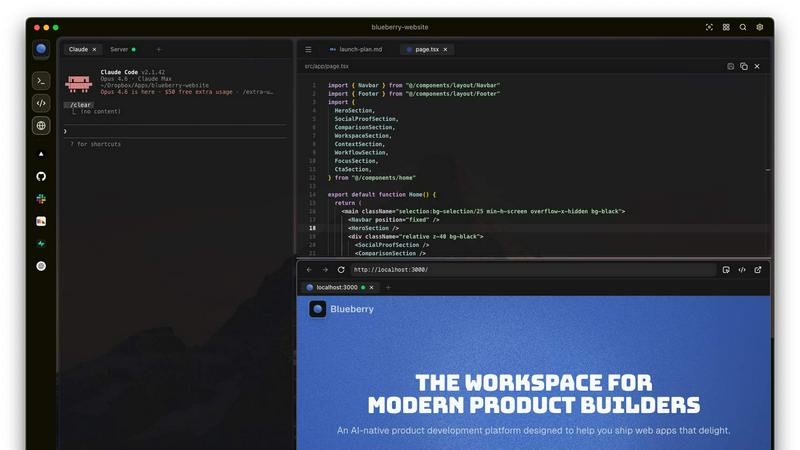
Blueberry is an AI-native Mac workspace that combines your editor, terminal, and browser for seamless product building.
Last updated: February 28, 2026

CloudBurn
Discover what your code changes will cost before they deploy to production.
Last updated: March 1, 2026
Visual Comparison
Blueberry
CloudBurn
Feature Comparison
Blueberry
Unified AI-Native Workspace
Blueberry consolidates your editor, terminal, and browser into one seamless, distraction-free window. This isn't just about putting panels side-by-side; it's about creating a cohesive environment where each component is aware of the others. The integrated design ensures that your workflow remains fluid, eliminating the cognitive load of managing multiple applications and allowing you to ship products faster from a single, powerful hub designed for modern development.
Live AI Context via MCP
This is the core intelligence of Blueberry. Its built-in MCP server acts as the nervous system, giving your connected AI model (like Claude or Codex) real-time, read-only access to your entire workspace context. The AI can see your open files, monitor terminal output, and observe the live browser preview simultaneously. This creates a paradigm shift where your AI assistant has full situational awareness, enabling it to provide accurate, context-rich suggestions and answers without you ever needing to manually provide snippets or screenshots.
Pinned Apps & Visual Context
Extend your workspace's intelligence beyond code. Blueberry allows you to dock essential web apps like GitHub, Linear, Figma, or PostHog directly within the interface. These pinned apps load with your project and share context with your AI. Furthermore, you can provide visual context by capturing screenshots or using an element selector directly from the preview browser, allowing your AI to understand UI issues or design intentions at a glance.
Professional-Grade Editor & Multi-Device Preview
You don't compromise on editing power. Blueberry includes a full-featured code editor with syntax highlighting, multi-cursor support, find/replace, and Git integration. Alongside it, the preview browser isn't basic—it offers built-in views for desktop, tablet, and mobile screens. This lets you instantly see how your application renders and behaves across different devices without leaving your workspace, ensuring what you build delights every user.
CloudBurn
Automated Pull Request Cost Analysis
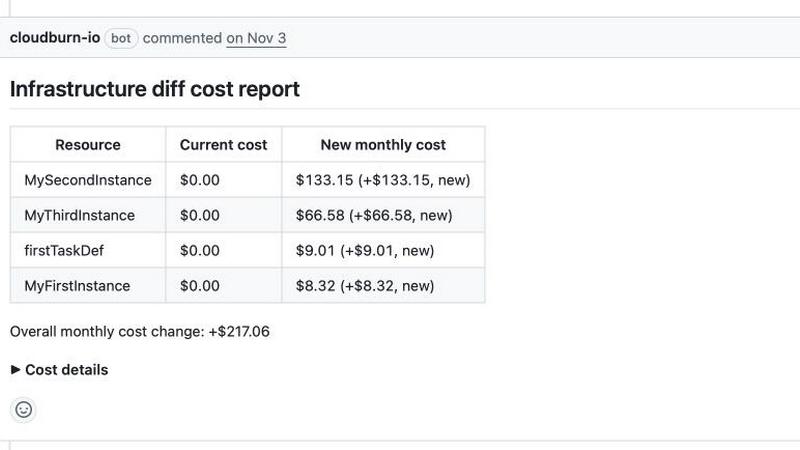
Imagine every infrastructure change being automatically audited for its financial impact. CloudBurn integrates directly with your GitHub workflow to analyze the diff in every pull request. Using live AWS pricing data, it calculates the exact monthly cost delta of your proposed changes and posts a clear, itemized report as a comment. This happens within seconds, turning cost awareness into a natural, non-disruptive part of your team's review process without any manual intervention.
Real-Time AWS Pricing Intelligence
How can you trust a cost estimate if it's based on outdated data? CloudBurn eliminates this uncertainty by pulling the very latest pricing information directly from AWS. This ensures that every cost projection for resources like EC2 instances, Fargate tasks, or RDS databases is accurate and reflective of current on-demand rates, giving you confidence that the numbers you see are the numbers you'll get.
Seamless Integration with Terraform & AWS CDK
Wondering how to fit a new tool into your existing IaC workflow? CloudBurn is designed to work natively with the tools you already use. By simply adding a GitHub Action for either Terraform Plan or AWS CDK Diff, you connect your pipeline. The tool automatically detects the output, sends it for analysis, and delivers the cost report, requiring no changes to your core development practices or codebase.
Detailed, Actionable Cost Breakdowns
A single total cost figure is helpful, but what if you need to understand the why behind it? CloudBurn provides granular, line-item breakdowns for every resource change. You can see the hourly rate, usage type, and a plain-language description for each component, enabling developers to make informed optimization decisions, like downsizing an over-provisioned instance, right during the code review.
Use Cases
Blueberry
Rapid Prototyping & Iteration
When speed is essential, Blueberry accelerates the build-measure-learn loop. You can write code, see changes live in the preview, debug terminal output, and ask your AI for implementation advice or bug fixes—all without switching contexts. This tight integration is perfect for quickly mocking up features, experimenting with new libraries, or iterating on UI components based on immediate visual feedback.
AI-Powered Debugging & Explanation
Stuck on a cryptic error in the terminal or complex logic in your route handler? Simply ask your AI assistant. Because it sees the exact error output and the relevant code files, it can diagnose issues with remarkable accuracy. You can also ask "how does this file work?" and receive an explanation grounded in the actual codebase, turning debugging from a frustrating hunt into an interactive learning session.
Cross-Platform UI Development
Building responsive web applications requires constant checking across screen sizes. With Blueberry's integrated multi-device preview, you can write a CSS rule and immediately toggle between desktop, tablet, and phone views to verify its effect. This seamless context switch ensures your UI is robust and responsive from the very first line of styling, streamlining the front-end development process.
Onboarding & Codebase Exploration
New to a project? Use Blueberry as your exploration companion. Open the repository, and let your AI assistant tour you through the codebase. Ask questions like "What's the main data flow here?" or "How is authentication handled?" The AI, with its live access to the entire file structure and code, can provide specific, guided answers, dramatically reducing the time it takes to understand and contribute to a new codebase.
CloudBurn
Preventing Costly Misconfigurations in PR Reviews
The most effective way to manage cloud spend is to stop it at the source. Engineering teams use CloudBurn to catch expensive mistakes—like accidentally provisioning a dozen xlarge instances instead of micros—before the code merges. This shifts cost governance left, empowering developers with the data to self-correct and preventing heart-stopping surprises on the monthly invoice.
Enabling Data-Driven Architecture Discussions
How often do design debates hinge on performance but ignore cost? With CloudBurn, teams can elevate their architectural discussions. When proposing a new microservices design or database solution, the immediate cost impact is visible to everyone in the PR. This allows for balanced conversations that consider both technical merit and financial sustainability from the earliest stages.
Streamlining FinOps and Budget Forecasting
For platform and FinOps teams, manually forecasting the cost of upcoming projects is a tedious chore. CloudBurn automates this estimation process. By analyzing the infrastructure code slated for development, teams can generate accurate, code-based forecasts, improving budget accuracy and providing clear financial accountability for each project or feature team.
Educating Developers on Cloud Cost Implications
Many developers write infrastructure code without a clear understanding of the financial weight of their decisions. CloudBurn acts as a continuous learning tool. With every PR comment, developers receive immediate feedback on the cost consequences of their code, fostering a culture of cost consciousness and building institutional knowledge over time.
Overview
About Blueberry
What if your entire development environment could think alongside you? Blueberry is an AI-native product development platform for macOS that reimagines the modern builder's workspace. It elegantly unifies the three core tools—a sophisticated code editor, a powerful terminal, and a live preview browser—into a single, focused application. This eliminates the constant, distracting juggle of windows and applications, allowing you to maintain deep focus on creating and shipping web applications. Designed for modern product builders, from indie hackers to engineering teams, Blueberry's true magic lies in its context-aware AI integration. By connecting to models like Claude, Gemini, or Codex via its built-in MCP (Model Context Protocol) server, your AI assistant gains a live, holistic view of your entire project: the code you're writing, the terminal output, and the real-time browser preview. This means you can stop the tedious copy-pasting of context and start having meaningful, informed conversations with AI that understands exactly what you're building, as you build it. It's more than a tool; it's a collaborative partner for your development flow.
About CloudBurn
What if you could peer into the financial future of your infrastructure code before it ever runs? CloudBurn is a transformative tool designed for engineering teams who use Terraform or AWS CDK to manage their cloud infrastructure. It addresses a critical, often painful gap in the development lifecycle: the disconnect between writing infrastructure-as-code and understanding its cost implications. Traditionally, teams discover budget overruns weeks later on their AWS bill, long after resources are provisioned and costs are accumulating. CloudBurn fundamentally changes this dynamic by injecting real-time cost intelligence directly into the code review process. Whenever a developer opens a pull request with infrastructure changes, CloudBurn automatically analyzes the diff using live AWS pricing data and posts a detailed cost report as a comment. This creates a powerful feedback loop, empowering teams to discuss, optimize, and adjust expensive configurations while the changes are still in development and easy to modify. It’s a proactive shield against budgetary surprises, transforming cost management from a reactive, finance-led scramble into an integrated, engineering-led practice. It’s for any team that has ever wondered, "How much will this new architecture actually cost?" and wants an immediate, accurate answer.
Frequently Asked Questions
Blueberry FAQ
What is MCP and why is it important?
MCP stands for Model Context Protocol, an open standard developed by Anthropic. It's crucial because it provides a secure, structured way for AI models to access tools and data. In Blueberry, the built-in MCP server safely exposes your workspace's context (files, terminal, browser) to AI models. This means the AI operates with a rich, real-time understanding of your project without ever needing direct access to your system, ensuring both powerful assistance and security.
Is Blueberry just for web development?
While Blueberry is explicitly designed as a premier platform for building web applications, its core features are beneficial for many software projects. The unified workspace and AI context are powerful for any development task that involves writing code, running commands, and needing live feedback. However, its optimized preview browser and web-focused workflow make it particularly exceptional for full-stack and front-end web development.
Can I use my own AI API keys?
Yes, Blueberry is model-agnostic. While it showcases integrations with popular models like Claude, Gemini, and Codex, it is designed to connect to any AI model that supports the MCP standard. You can configure it to use your preferred model by providing your own API keys and endpoints, giving you the flexibility to choose the AI assistant that best fits your workflow and budget.
Is Blueberry really free?
Yes, Blueberry is currently 100% free during its beta period. The team is focused on gathering feedback and refining the product with its early community of users. There is no indication of specific future pricing plans in the provided materials, but the product is completely free to download and use for macOS while it remains in beta.
CloudBurn FAQ
How does CloudBurn calculate the cost estimates?
CloudBurn calculates estimates by parsing the infrastructure diff from your Terraform plan or AWS CDK synthesis output. It identifies the specific AWS resources being added, modified, or removed. Then, it cross-references these resources with real-time pricing data from AWS's own pricing API, applying the appropriate rates based on region, instance type, and other configurations to generate a projected monthly cost.
Is my code or cloud credentials exposed to CloudBurn?
No, your sensitive code and AWS credentials remain secure within your GitHub environment. CloudBurn operates by receiving only the textual output of your terraform plan or cdk diff command via a GitHub Action. Your actual Terraform state files, AWS access keys, or repository code are never transmitted to CloudBurn's servers, ensuring a secure and compliant workflow.
What infrastructure-as-code tools does CloudBurn support?
Currently, CloudBurn offers dedicated, seamless support for two of the most popular IaC frameworks: HashiCorp Terraform and the AWS Cloud Development Kit (AWS CDK). Support is implemented through easy-to-use GitHub Actions that capture the plan or diff output specific to each tool, making integration straightforward for teams using either standard.
Can CloudBurn analyze costs for existing infrastructure?
The primary focus of CloudBurn is on analyzing changes—the diff in a pull request. It is designed for pre-deployment cost visibility. For comprehensive cost management and analysis of your already-deployed, full infrastructure stack, you would typically use a cloud provider's native cost tool (like AWS Cost Explorer) or a dedicated cloud cost management platform.
Alternatives
Blueberry Alternatives
Blueberry is a macOS application designed for developers, specifically within the integrated development environment (IDE) category. It consolidates the essential tools of an editor, terminal, and browser into a single, unified workspace to streamline workflow and reduce context switching. Users often explore alternatives for various practical reasons. These can include budget constraints, the need for cross-platform compatibility beyond macOS, or a desire for different feature sets, integrations, or user interface philosophies. The search for the right tool is a personal journey in optimizing one's development environment. When evaluating alternatives, consider your core needs. Key factors include the depth of native integrations, support for your preferred programming languages and frameworks, the overall user experience, and how well the tool facilitates the specific workflow you aim to enhance, whether it's AI-assisted coding, web development, or system operations.
CloudBurn Alternatives
CloudBurn is a specialized tool in the development and DevOps category, designed to bring real-time cloud cost intelligence directly into the infrastructure-as-code workflow. It analyzes Terraform or AWS CDK changes in pull requests to forecast AWS costs before code ever reaches production, transforming cost management from a reactive finance task into a proactive engineering practice. Users often explore alternatives for various reasons. Some may seek different pricing models or have budget constraints that require a more basic solution. Others might need support for additional cloud providers beyond AWS, or require deeper integration with CI/CD platforms other than GitHub. The specific feature set, such as the depth of cost analysis or reporting capabilities, can also drive the search for a different tool. When evaluating options, it's wise to consider a few key areas. Look for accurate, up-to-date pricing data that reflects your actual usage and regions. Seamless integration into your existing developer workflow is crucial for adoption, ensuring the tool provides value without becoming a burden. Finally, consider the clarity and actionability of the insights provided; the best tools empower teams to make informed decisions quickly, right where they code.