
BarBrain vs Skene
Side-by-side comparison to help you choose the right AI tool.

BarBrain
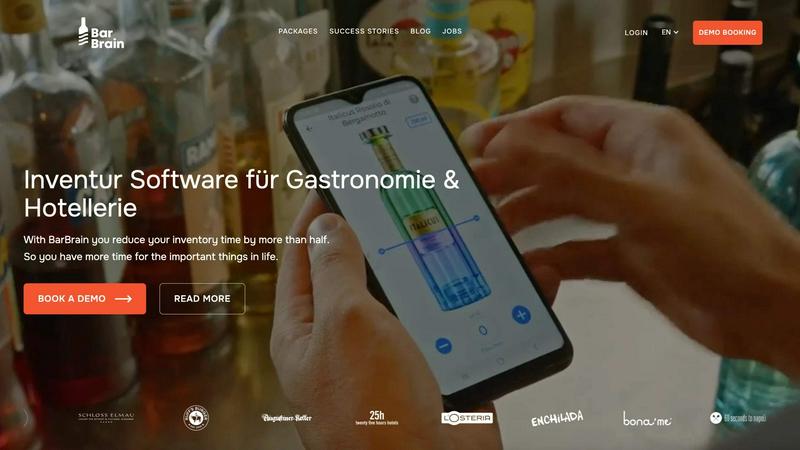
Discover how BarBrain transforms your bar and restaurant inventory into a fast, effortless process with precise digital tracking.
Last updated: April 4, 2026

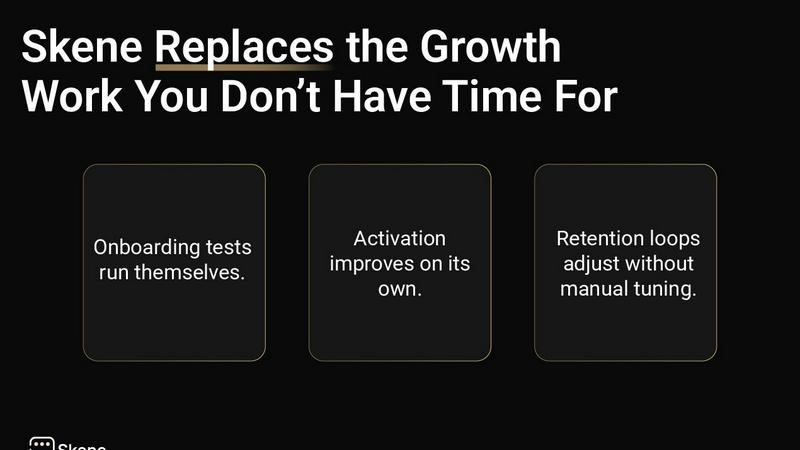
Skene transforms your codebase into a promptable growth engine you fully own.
Last updated: February 28, 2026
Visual Comparison
BarBrain
Skene
Feature Comparison
BarBrain
Parallel Counting on Multiple Devices
Unlock unprecedented speed by conducting your inventory count simultaneously across several iOS and Android smartphones or tablets. This collaborative feature allows your team to split up, cover different sections like the bar, kitchen, and storage rooms at the same time, and sync all data instantly. It turns a hours-long solo mission into a coordinated team effort that can be completed in a fraction of the time, drastically reducing labor costs and operational downtime.
Vast Pre-Loaded Product Catalog
Jumpstart your inventory setup with immediate access to a massive, industry-specific catalog containing over 30,000 products. This extensive database covers everything from spirits, wines, and AFGs (alcohol-free beverages) to food ingredients and even housekeeping supplies. It eliminates the need to manually enter every single item from scratch, ensuring consistency and saving countless hours during the initial configuration and when adding new stock items.
Automatic Inventory Reporting
Imagine finishing a count and having a comprehensive, polished report generated for you automatically—that's the reality with BarBrain. The software compiles all the data from your digital count, eliminating the need for manual transcription, cross-referencing spreadsheets, or error-prone calculations. You receive a clear, finalized summary of your stock levels, values, and variances immediately, ready for analysis and action.
Fill-Level Slider for Open Items
Accurately accounting for partially used products like open bottles of liquor, wine, or food containers is now effortless. Instead of guessing or using complex fractions, staff simply uses an intuitive slider on the app to visually indicate the remaining amount. This one-tap capture ensures precise tracking of usage and cost for every item, providing much more accurate data for recipe costing and waste identification than estimating with generic software.
Skene
Codebase-Native Signal Detection
Skene integrates directly with your repository, performing a deep analysis of your source code to automatically detect growth signals. It scans your application's structure, understands user flows, and identifies key friction points and activation opportunities without you having to manually instrument events or define funnels. This creates a rich, contextual understanding of your product's growth potential derived from the very architecture of your software.
AI-Prompted Growth Implementation
Move beyond manual configuration. With Skene, you can instruct an AI agent to design and implement growth strategies using natural language prompts from your development environment. This allows you to rapidly prototype and deploy optimized onboarding sequences, lifecycle automations, and retention loops by simply describing the desired outcome, making sophisticated growth engineering accessible without requiring deep expertise.
Autonomous Iteration Engine
Skene operates as a continuous optimization layer. Once initial flows are established, the system autonomously runs experiments, analyzes user interaction data, and deploys improved versions of your growth loops. This creates a self-improving product where the mechanisms guiding user success evolve and refine themselves based on actual behavior, turning your app into a learning system.
Owned Growth Infrastructure
Replace brittle third-party scripts and black-box SaaS tools with code you own and control. Skene's framework integrates as a native part of your tech stack, ensuring your growth logic is version-controlled, performant, and modifiable. This eliminates data silos, preserves your application's performance, and allows your entire team—and your AI agents—to interact with and build upon your growth infrastructure.
Use Cases
BarBrain
Independent Bars and Restaurants
For a single-location establishment, every minute and every euro counts. BarBrain empowers independent owners and managers to gain precise control over their stock without needing a dedicated inventory manager. They can quickly identify which drinks are most profitable, spot unusual shrinkage, and place accurate supplier orders, all leading to tighter cost control and improved bottom-line visibility from a tool designed for their scale.
Multi-Unit Restaurant Groups
Managing consistency and cost across several locations is a monumental challenge. BarBrain provides a unified system for standardizing inventory procedures group-wide. Headquarters can oversee data from all venues in one place, compare performance, identify best practices, and ensure every site is operating with the same level of efficiency and financial oversight, turning inventory data into a powerful tool for centralized management.
Hotels and Resorts
The hospitality sector manages a vast and varied inventory, from minibar items and banquet supplies to restaurant stock and breakfast buffet ingredients. BarBrain's comprehensive catalog and flexible structure are perfectly suited to track all F&B (Food & Beverage) products across multiple outlets and storage areas within a hotel, providing a complete, real-time picture of usage and cost for complex operations.
Nightclubs and High-Volume Venues
In fast-paced environments with high product turnover and often complex drink recipes, speed and accuracy are paramount. BarBrain's parallel counting feature allows teams to conduct a full inventory during short closing windows. The precise tracking of pours and bottle usage helps manage high-cost spirit inventory effectively, control waste, and ensure profitability on every high-volume night.
Skene
Streamlining User Onboarding
For products struggling with low activation rates, Skene analyzes the signup and first-use journey directly from the code. It automatically identifies where users drop off and can generate, test, and deploy improved onboarding flows—like contextual guidance or progressive feature reveals—to dramatically increase the number of users who reach the "aha!" moment and realize core value.
Automating Customer Lifecycle Engagement
Instead of manually building email sequences or in-app messages, product teams can use Skene to create automated, behavior-triggered engagement loops. By understanding user actions from the codebase, Skene can prompt the implementation of nudges for feature adoption, re-engagement campaigns for inactive users, and success milestones that strengthen retention, all as native product experiences.
Optimizing for Product-Led Growth
Early-stage startups and indie developers can implement a sophisticated PLG motion without a large team. Skene acts as an automated growth co-pilot, handling the continuous cycle of identifying opportunities, hypothesizing improvements, and shipping experiments. This allows small teams to compete with the iterative power of much larger organizations by making data-driven optimization a core product function.
Reducing Friction in Key User Flows
For any application, pinpointing exactly where users encounter confusion or abandonment is challenging. Skene audits your code to visualize and understand critical user paths, such as checkout processes or complex feature workflows. It then suggests and can implement targeted optimizations to smooth out these journeys, directly improving conversion rates and user satisfaction.
Overview
About BarBrain
What if the most tedious, error-prone task in your bar or restaurant could become a source of clarity and profit? BarBrain is the answer to that very question. It's a specialized inventory management platform built from the ground up for the unique rhythms and challenges of the hospitality industry. Forget adapting clunky warehouse software; BarBrain speaks the language of hospitality, understanding pours, recipes, and perishables intuitively. It is designed for anyone who manages stock in a food and beverage setting, from the owner of a single cocktail bar to the operations manager of a multi-location restaurant group or hotel. Its core mission is to transform inventory from a dreaded chore into a strategic advantage. By enabling lightning-fast digital counts, providing exact cost analysis per menu item, and highlighting waste in real-time, BarBrain delivers the reliable data operators need to protect their margins, optimize orders, and ultimately, stop leaving money on the table. It's not about adding complexity; it's about providing a clean, focused tool that works the way your business already does, saving you over half your inventory time according to their users.
About Skene
What if your product could learn to grow itself? Skene is an AI-powered PLG (Product-Led Growth) infrastructure that fundamentally reimagines how software scales. It moves growth from being an external, manual afterthought to a core, intelligent layer of your product itself. Designed for indie developers, early-stage startups, and product-led companies, Skene is a fully automated iteration engine that allows you to scale your user base without the need to scale a dedicated, costly growth team. Its revolutionary premise is simple yet powerful: growth should be code you own, version, and prompt—not a fragile third-party script you paste into your application. By connecting directly to your codebase and IDE, Skene analyzes your source to intuitively understand user flows, detect points of friction, and identify hidden activation opportunities. It then autonomously creates, tests, and deploys optimized versions of critical growth loops for onboarding, activation, and retention. This transforms your application into a self-optimizing engine for user success, where growth mechanisms improve continuously based on real user behavior. Instead of wrestling with complex dashboards and manual A/B tests, you can simply prompt your AI agent to implement sophisticated growth strategies, making high-level optimization accessible directly from your development environment.
Frequently Asked Questions
BarBrain FAQ
How does BarBrain save so much time on inventory?
BarBrain digitizes the entire process, eliminating manual pen-and-paper counting and subsequent data entry into spreadsheets. Features like parallel counting with multiple devices allow your team to count simultaneously, while the automatic report generation removes all post-count administrative work. This streamlined workflow is why users report saving over 75% of the time previously spent on inventory.
Can BarBrain handle both food and beverage inventory?
Absolutely. BarBrain is built as a comprehensive F&B (Food & Beverage) solution. Its extensive catalog and flexible item creation allow you to track everything from spirits, wine, and beer to all food ingredients, dry goods, and even non-food items like cleaning supplies. The fill-level slider is particularly useful for accurately tracking open food containers.
Is BarBrain difficult to set up for my existing stock?
The setup process is designed to be straightforward. You can leverage the massive pre-loaded product catalog to quickly find and add your items. Furthermore, the BarBrain team offers support during onboarding to help you build your digital stock list, ensuring a smooth transition from your old system, whether it was a spreadsheet or another software.
Do I need special hardware or training to use BarBrain?
No special hardware is required. BarBrain runs on standard iOS and Android smartphones and tablets that you likely already have. The interface is designed to be intuitive for hospitality staff, requiring minimal training. The counting process is as simple as scanning a barcode or selecting an item and adjusting the quantity or fill level.
Skene FAQ
How is Skene different from traditional customer experience software?
Traditional tools like tour builders or analytics platforms require manual, brittle configuration on top of your UI. They often rely on CSS selectors that break with every code deploy and create siloed data. Skene is fundamentally different; it reads your actual codebase to understand your product's structure and automatically generates and maintains growth flows. When you update your code, Skene's understanding and implementations update in tandem, eliminating constant maintenance.
How long does it take to set up Skene?
Setup is designed to be incredibly fast, taking less than 60 seconds. You simply connect your GitHub or GitLab repository with read-only access. Skene then automatically analyzes your codebase to generate initial PLG insights and flows. No initial code changes or API modifications are required to get started and see value.
Is my source code secure with Skene?
Absolutely. Security is a primary concern. Skene only requires read-only access to your repository, meaning it cannot push or modify your code. All analysis occurs within a secure, isolated environment. Your proprietary code remains yours, and the growth logic Skene helps you build is deployed as code you own within your own infrastructure.
What kind of analytics and insights does Skene provide?
Skene offers a dashboard that provides real-time analytics on user progress, flow completion rates, and engagement metrics. It goes beyond surface-level data to identify specific bottlenecks in your journeys, track time-to-value, and measure the impact of each iterative change. This provides data-driven insights to continuously optimize your onboarding and growth loops.
Alternatives
BarBrain Alternatives
BarBrain is a specialized inventory management tool built for the unique demands of bars and restaurants. It belongs to the hospitality productivity category, focusing on solving the tedious and error-prone task of counting stock and calculating costs. Its purpose is to replace manual spreadsheets and generic software with a system that understands pours, recipes, and the fast-paced nature of the industry. Users often explore alternatives for various reasons. Some may need a solution that fits a very specific budget or business model, while others might require deeper integrations with their existing point-of-sale or accounting platforms. The search can also be driven by a need for different feature sets, such as advanced reporting, employee scheduling modules, or a particular user interface style that better suits their team's workflow. When evaluating other options, it's crucial to look for software that genuinely understands hospitality operations. Key considerations include how the tool handles recipe costing, tracks waste and variance in real-time, and simplifies the physical counting process. The ideal alternative should provide clear visibility into your exact pour costs and profit margins without requiring extensive training or forcing you to adapt to a system designed for a warehouse.
Skene Alternatives
Skene is an AI-powered product-led growth infrastructure, a category of tools designed to automate and optimize user acquisition and retention directly within your product. It works by integrating with your codebase to analyze user flows and autonomously test improvements, turning your application into a self-optimizing engine. Users often explore alternatives for various reasons. Some may seek a different pricing model or a more traditional, dashboard-driven analytics approach. Others might need a solution that integrates with a specific tech stack or offers a different balance between automation and manual control. The needs of a large enterprise can differ greatly from those of an indie developer. When evaluating options, consider how deeply the tool understands your product. Does it work with surface-level events or can it derive intent from your actual code? Look at the level of automation: does it just provide insights, or can it implement and test changes? Finally, assess ownership—is the growth logic embedded in your code, or is it dependent on an external, black-box service?